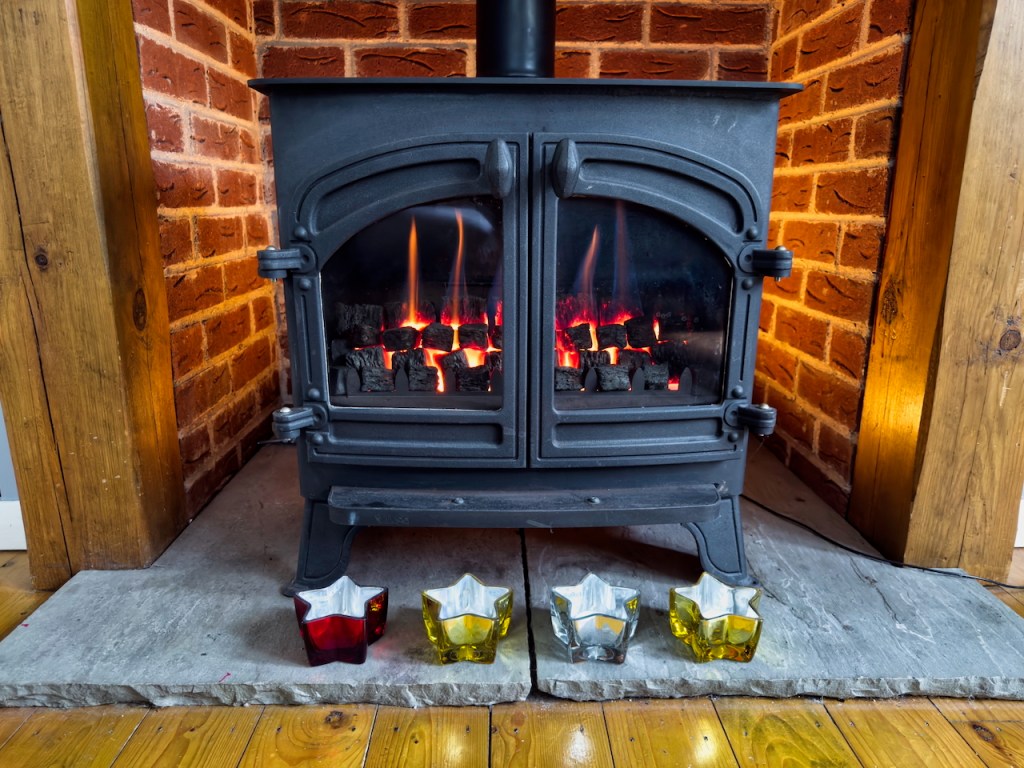
I have closely monitored energy consumption of a typical stove-like gas fire and was shocked by the results.
Before I retired in 2022 I was an energy, climate change and fuel poverty professional and maintain a strong interest in these issues to this day. Advising people on how to save energy – and therefore money – was never an easy task as everybody’s circumstances are different and there are so many factors that influence the outcome. Since retiring I have continued to monitor energy data and the energy efficiency of various gadgets and appliances. Being a pensioner and a private tenant on a low income pretty much requires it!
I am rarely surprised by the energy efficiency of any given item in the home, but boy was I surprised by how inefficient my gas fire is! But, before I get down to the details there are a few things you need to know.
My circumstances
First of all, I am a single person living in a 2-bed semi-detached bungalow. The central heating provided by the landlord is of a poor standard but, sadly, fairly typical. The gas condensing boiler is 20 years old and feeds radiators in every room; it was not very efficient to start with and, as all boilers do, has reduced in efficiency through its life. Consequently my energy bills are considerably higher than they could be. The boiler provides heating and hot water, including the shower. The only gas-fired appliances in the home are the boiler and the fire; there is no gas cooker or any other gas appliance.
The living room has a gas fire as well as a radiator. This is easily the coldest room in the home but, because the radiator is correctly sized, it warms the room quickly when the heating is on. So, why is there also a gas fire?
Good question. I wish it was not there as it takes up over 1 square metre of space – fire, footing, mantle and chimney breast. That may not sound like a lot but it reduces the functionality of the room considerably. However, I am a tenant so there is nothing I can do about it.
Essentially, it serves no purpose and is effectively a ‘feature’ that, depending on your taste, may or may not ‘look nice’. You would certainly not have it on if the central heating was on – the heat would be unbearable.
HOWEVER, I have often thought that it might serve a purpose at certain times of the year and when certain conditions – mainly weather related – are met. Spring and autumn come to mind. Those days when it is dull and wet but not cold enough to justify having the heating on. Put the fire on and stay in that room for as long as you can.
BUT, I have learned this week just how expensive the fire is when it is OFF!
I switched the fire off – including the pilot – some 4 years ago because I suspected it was using too much gas. Sure enough, in the following year my gas bills were lower every month than the previous year. Every month.
There are, of course, a number of explanations for this, but the pilot light being on for a year then off for a year was principal amongst them, as I have now been able to confirm.
The Data
The chart below shows gas consumption for the day (16 April 2025) with the gas fire pilot light on all day. Smart gas meters typically ‘read’ gas consumption half-hourly so each ‘blip’ on the scale from midnight to 23:30 (47 readings per day) represents half an hour of gas. The pilot light is using about 5.6kWh gas per day. My total gas consumption on that day was 10.96kWh. You can see three peaks during the day: a morning wash (8:30am), an early evening wash (5pm) and the big peak – washing the dishes at 8pm. The central heating was off all day.

This is a fairly normal day for me, apart from the gas fire pilot light. I have a shower rather than wash on two mornings a week, which obviously uses more gas. I try to wash dishes once a day, but do not always succeed. Don’t forget I live on my own; if you have a family you would probably wash dishes two or even three times a day.
My gas bill for the day was £0.94 – 65p for gas and 29p standing charge. My morning wash cost about 3p (a shower is about 7p) and the dishes about 20p.
A day WITHOUT the pesky pilot light
The chart below shows a typical day (10 April 2025) before the gas fire pilot light was turned on. The most obvious difference between this and the chart above is the absence of the ‘blip’ every half hour throughout the day. There is just my morning wash and the dishes early afternoon. Cost of gas 6p plus standing charge 29p.
Incidentally, quite apart from anything else this demonstrates the unfairness of the fixed standing charge.

My total monthly energy bill
I pay £90 per month to my energy retailer (Octopus Energy) and am permanently in credit. This means I am providing my energy retailer with an interest-free loan throughout the year. That is an injustice – and a story for another day.
Leaving the gas fire pilot light on would add £14 a month to my energy bill. This is the figure that shocked me after I worked through all the data. Two pence an hour does not sound like much, but when an appliance is on 24 hours a day it mounts up. Having a shower uses a lot of gas but you are in the shower for only 5 minutes or so.
Please note…
As mentioned earlier, giving energy efficiency advice is fraught with difficulty as there are so many variables at play. The figures I have provided are correct for my gas fire and, if you have a similar fire are likely to apply to you too. My advice therefore is to switch the fire fully off, as mine is most of the time. This will save you money and prolong the life of the fire.
However, if your gas fire is your only means of heating a particular room – or even your whole house – you will have little choice but to leave the pilot on for much of the heating season, typically late October to late March in the UK. In my experience getting the pilot lit and the fire going again can require perseverance and can even be quite difficult, which will be off-putting for some.
 Colin Anderson
Any thoughts? Leave a comment!