Singles that survived from my time as ‘Funky Genghis’ at the LSE in the 70’s – and occasional events into the 80’s. This particular single tells a riveting story that I think would make a great movie linking the evolution of the song first recorded in 1923 with the events that inspired it back in 1895.
Wilson Pickett was, of course, one of the true greats in the world of soul and R&B, with so many classics to his name. This is a great version of a much-recorded song with versions by everyone from Taj Mahal to Neil Diamond, often with striking variations in the lyrics and even the song title. It is a song but it is also a story, and quite a cinematic one at that – a western that takes place in a bar complete with gunslinger, card game, stetson hat and the inevitable shoot-out.
I possess many versions of the song: Taj Mahal, Dr.John, Neil Diamond, Lloyd Price and this Wilson Pickett single imported from the United States. If you look closely at the single the writers are given as Harold Logan and Lloyd Price. However, the song refers to a real incident that occurred in 1895 and the song, written in 1911, was first recorded in 1923, ten years before Lloyd Price was born. In 1923 the song had the title Stack O’Lee Blues.
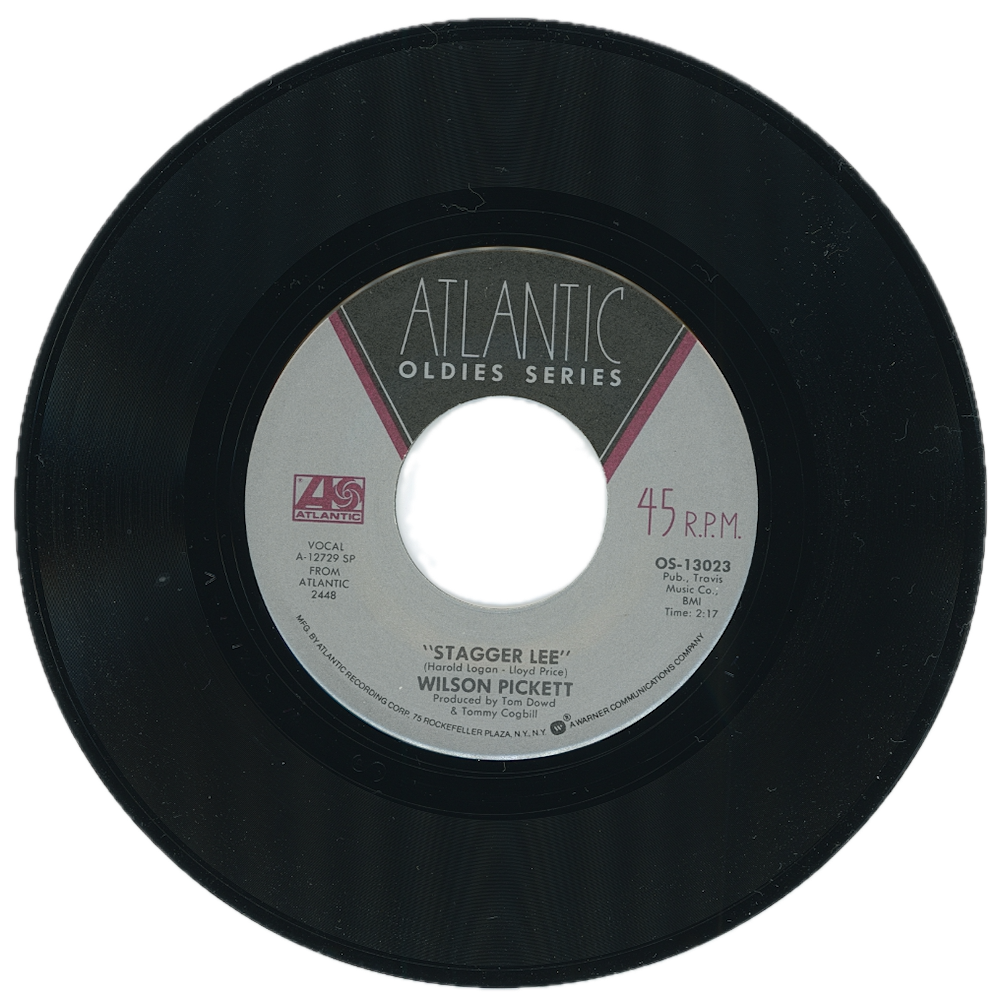
It sometimes surprises me that the events of Christmas 1895, the murder of Billy Lyons by “Stag” Lee Shelton and his subsequent incarceration and eventual death in prison, has never formed the basis of a movie about the long history and many variations of the song, a truly great song telling a great story. The murder, on the face of it, was over a stetson hat, a common factor in the versions of the song I’ve heard. However, there must have been a great deal more to the event than just the hat; it seems likely that these were two underground crime rivals involved in prostitution. It is even suggested that the protagonists nickname may have been “Stack Lee” named after a riverboat of that name owned by the Lee family; it was essentially a floating brothel and casino.
You will find the song titled “Stack-O-Lee” by Champion Jack Dupree (1959) and Professor Longhair (1977), ”Stack O’lee” by Doc and Merle Watson (1967) – and many other variations.
However, the ‘standard’ version by Lloyd Price reached No.1 on the Billboard singles chart in the US in 1959. The Wilson Pickett version featured here was recorded in 1967 and features on his 1968 album “I’m In Love”.
Wilson Pickett, Tommy Cogbill & Neil Diamond
What links these three you might ask! Well, I have already mentioned that Neil Diamond recorded the song – and a pretty good version too – in 1979. If you look again at the single label above you will see that it is produced by Tom Dowd and Tommy Cogbill. Tom Dowd needs no introduction – almost anyone into music will know of him. However, Tommy Cogbill is less well known, but was a very well respected producer and bass-player working out of Nashville, Memphis and Muscle Shoals. It is his bass you can hear on another famous Wilson Pickett song – Funky Broadway – and on Dusty Springfield’s Son of A Preacher Man.
Back in the mid-to-late 60’s Tommy was also playing bass with and producing some of Neil Diamond’s best ever output. Notable for me is Holiday-Inn Blues on the album Velvet Gloves and Spit and many of the songs on the album Brother Love’s Travelling Salvation Show. Velvet Gloves is very patchy but BLTSS is fabulous. The song Holiday-Inn Blues is, for me, the best song ever written about a young band on the road, driving from town to town in two Plymouth wagons, one with the band and the other with their gear. Tommy Cogbill is even name-checked in the song; apparently he’s “getting uptight” in the back of one of the Plymouth’s!
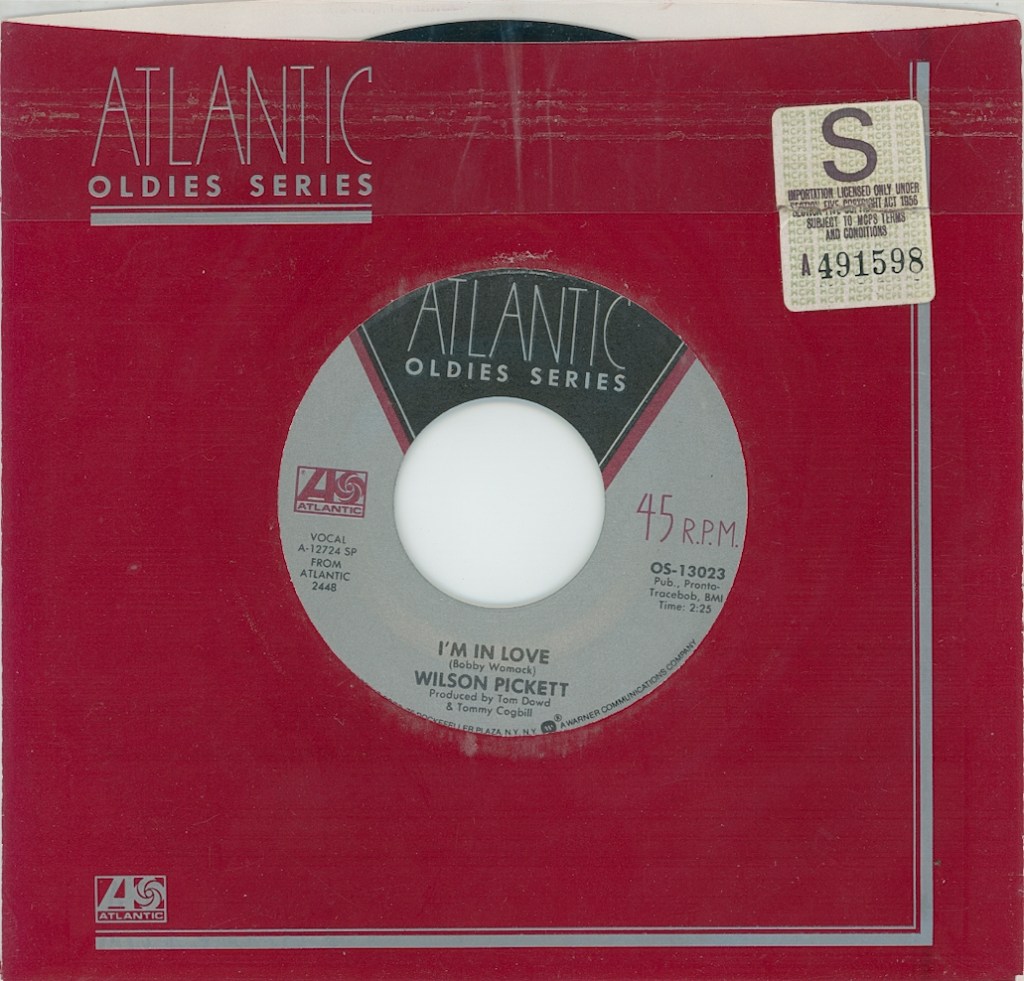
Now, flip the disc over and the track is I’m In Love – written by Bobby Womack. In my next ‘Groovy 45’s’ I shall extend this ‘link’ further, as it features a Bobby Womack single written by… you guessed it, Neil Diamond!


Any thoughts? Leave a comment!