Once upon a time my town had a proper bus station – and it was good. There was a café, a newsagent, toilets and the all-important office where you could ask a real person when the next bus home was due to leave. Each bus bay was clearly marked with destinations and stops on route. It was a gathering place for people of all ages and from all over the town and the towns and villages beyond. A chat, a moan, a cup of tea. Buy the evening paper. Sit and read. There were plenty of seats to rest weary shoppers and workers.
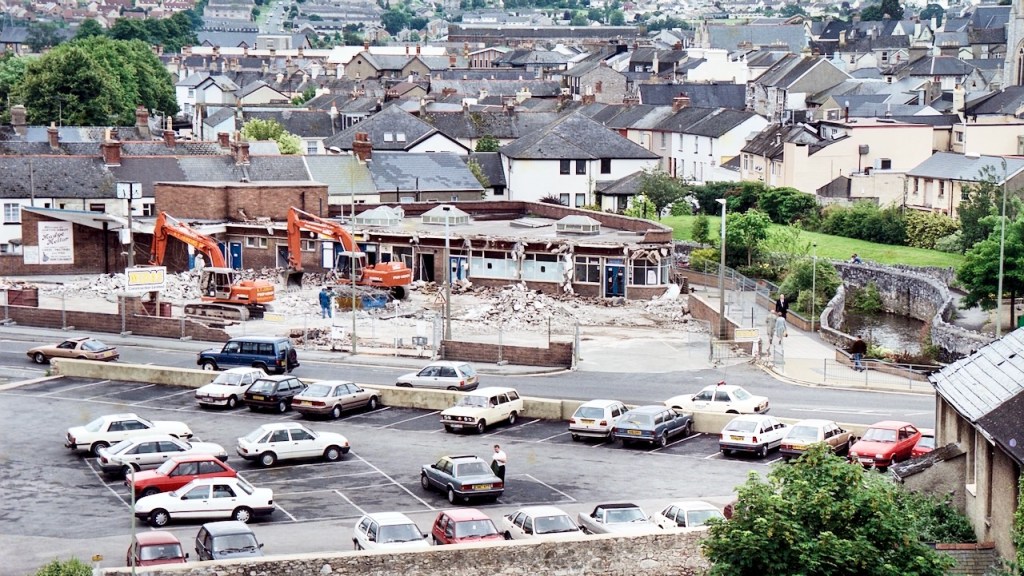
But one day an evil demon, known to some as Dan Dan the Planning Man, decided we didn’t need it any more, so in 1992 it was made to disappear. No-one has seen it since, but some lament its passing, even today.
When I say ‘proper’ bus station I mean just that. An actual purpose-built structure designed for people to wait for buses in reasonable comfort – and with help on hand if you missed your bus or weren’t sure which one would take you to the seaside. Not the forbidding grey canyon that replaced it, and which to this day is a pale excuse for a ‘bus station’. It is no more than a bus-lane sandwiched between the multi-storey car park and a giant windowless wall of what was once a supermarket. A bleak, draughty, soul-destroying place which, like all canyons, is always at least half in the shade. And which could not be mistaken for a bus station, although I hear people refer to it as such.
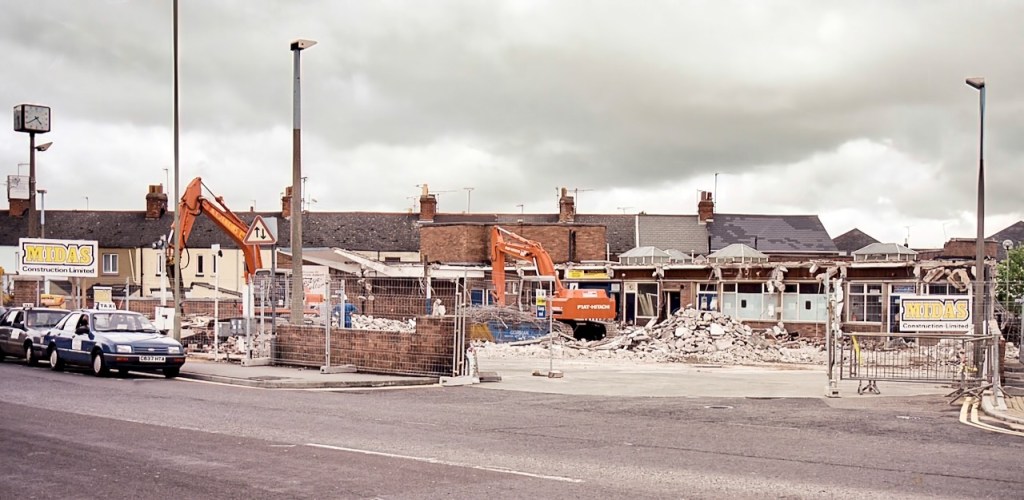
From the age of 8 I was in the bus station most days. It was like the narrow neck of an hourglass, with work or school on one side and home on the other. In my case, I went through it to school in the morning and home in the evening.
In 1964 my family became five and, after tantrums in the housing office, we were finally moved out of our 2-room basement slum in the town centre and granted our first council house at the top of the biggest estate in town. We were a working class family on the rise! And I mean that literally as well as metaphorically – it was a steep walk to the top of those hills!
A council house no less, with rare luxuries like an indoor toilet and hot water on tap! I could say goodbye to a zinc tub in the kitchen on Sunday nights before school – and look forward to my first real bath in four years…
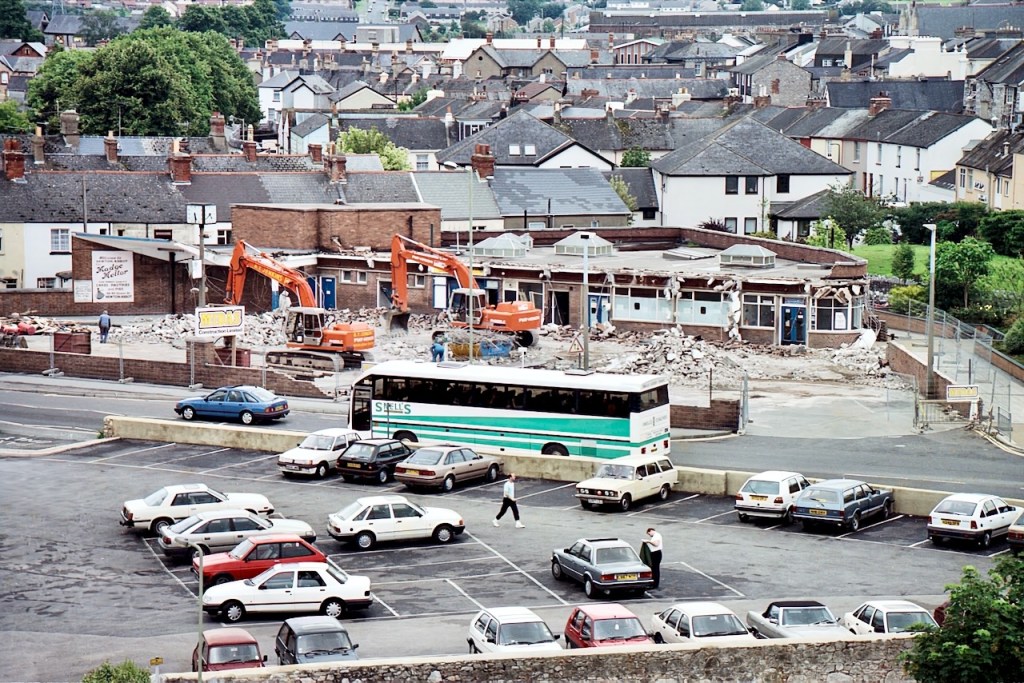
In those days there were three double-decker buses every hour on three different routes through the estate – it was a big estate. The bus station made it easy to find your bus. Red buses were for the urban routes and mainly double deckers. Even back in the 60’s the 12 took you to Torquay, Paignton and Brixham. Other red buses took you out to the suburbs – like Buckland and Kingsteignton – or to Exeter. Green buses were normally single deckers and they went to all sorts of exotic country places: Chagford, Moretonhampstead, Okehampton, Lustleigh, Ilsington, Chudleigh, Widecombe – as a kid I’d never heard of most of the destinations listed on each of the bus bays. Just imagine, a bus every hour to Moretonhampstead! Unimaginable today.
As I grew up and went to secondary modern school I learned of the importance of frequenting the famous Cider Bar before boarding the 12 to Torquay and its bars and clubs. The reason was simple: cider was cheap and strong, so not much was needed for a teenager out for a good time around the harbour. Beer and cider was, then and now, very expensive in the clubs.
It did not take us long to realise that the penny had dropped with some of our Torquay mates, who hopped on the 12 to Newton Abbot to get tanked up before returning to Torquay for ‘a night on the town’!
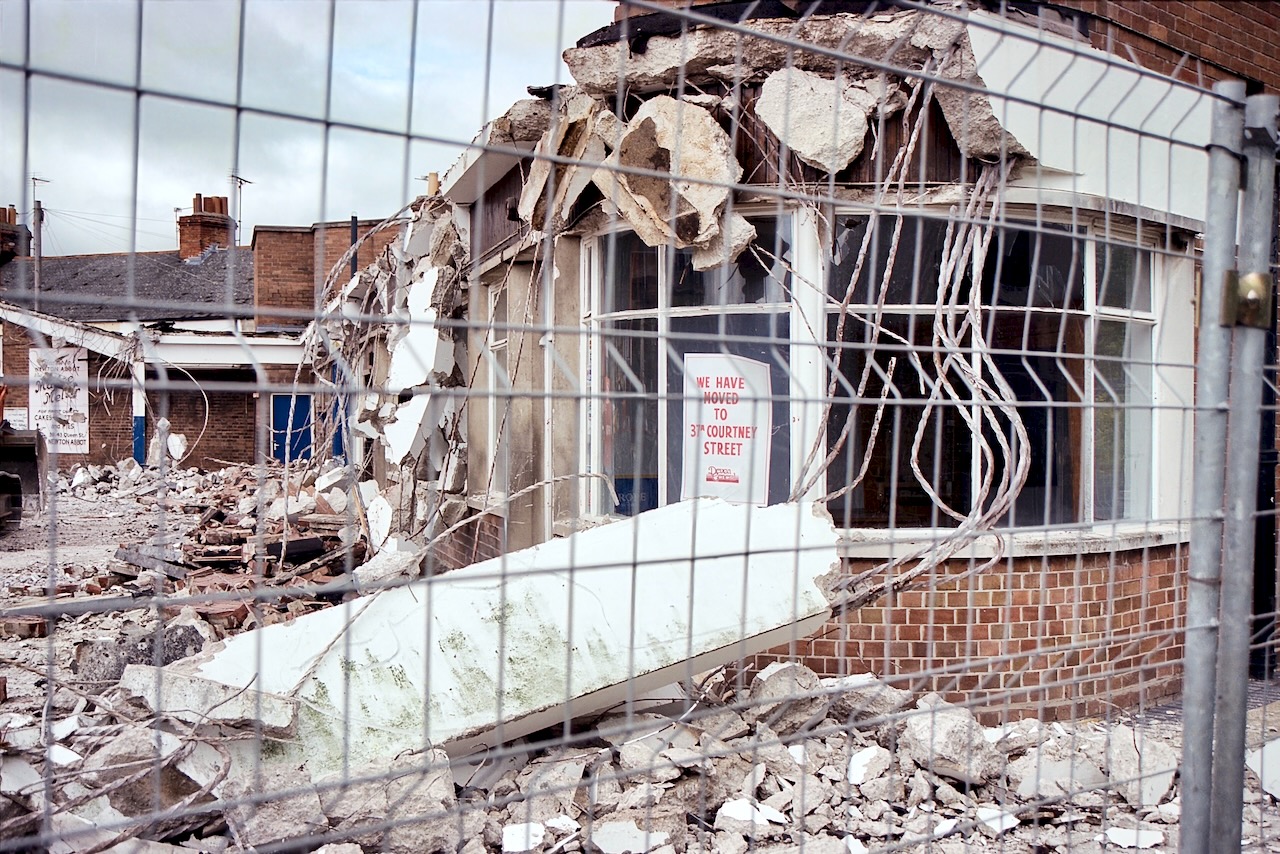
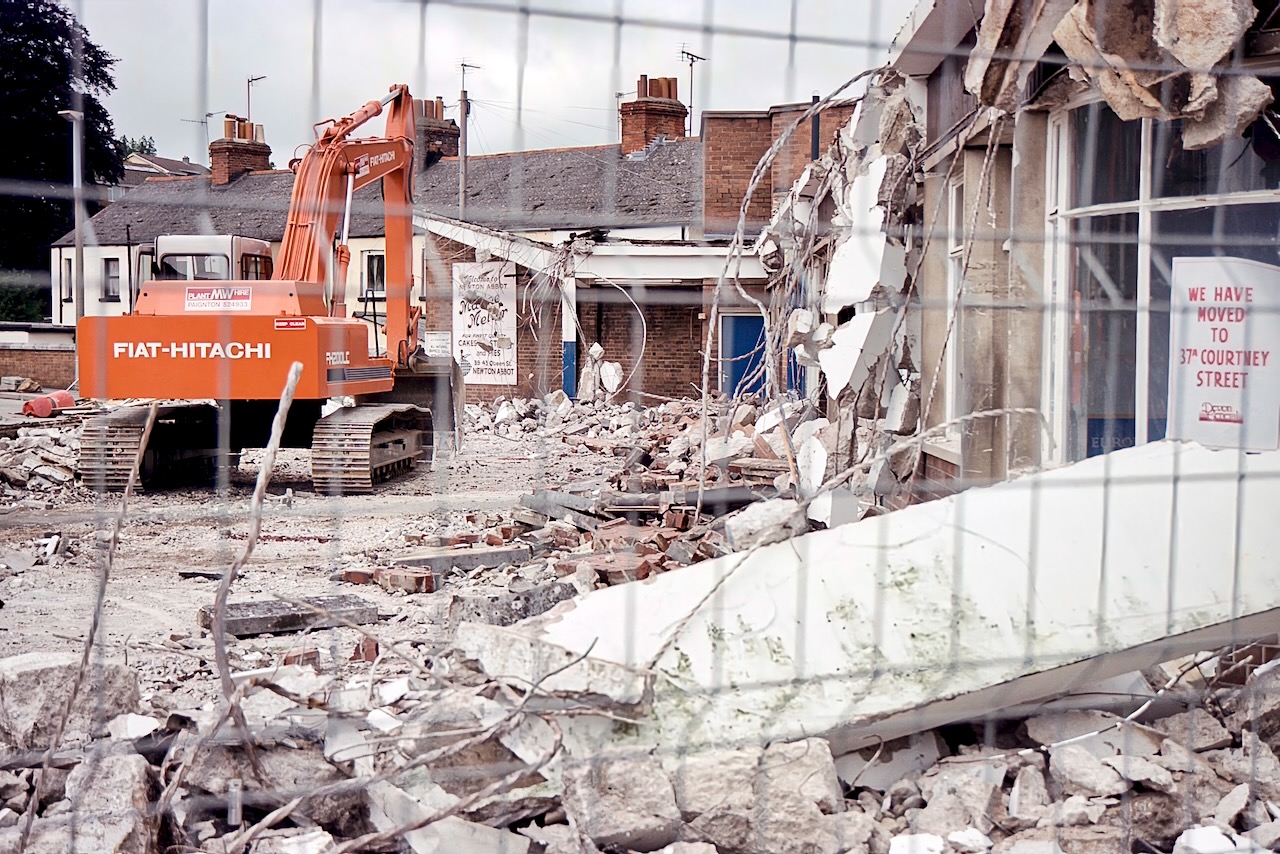
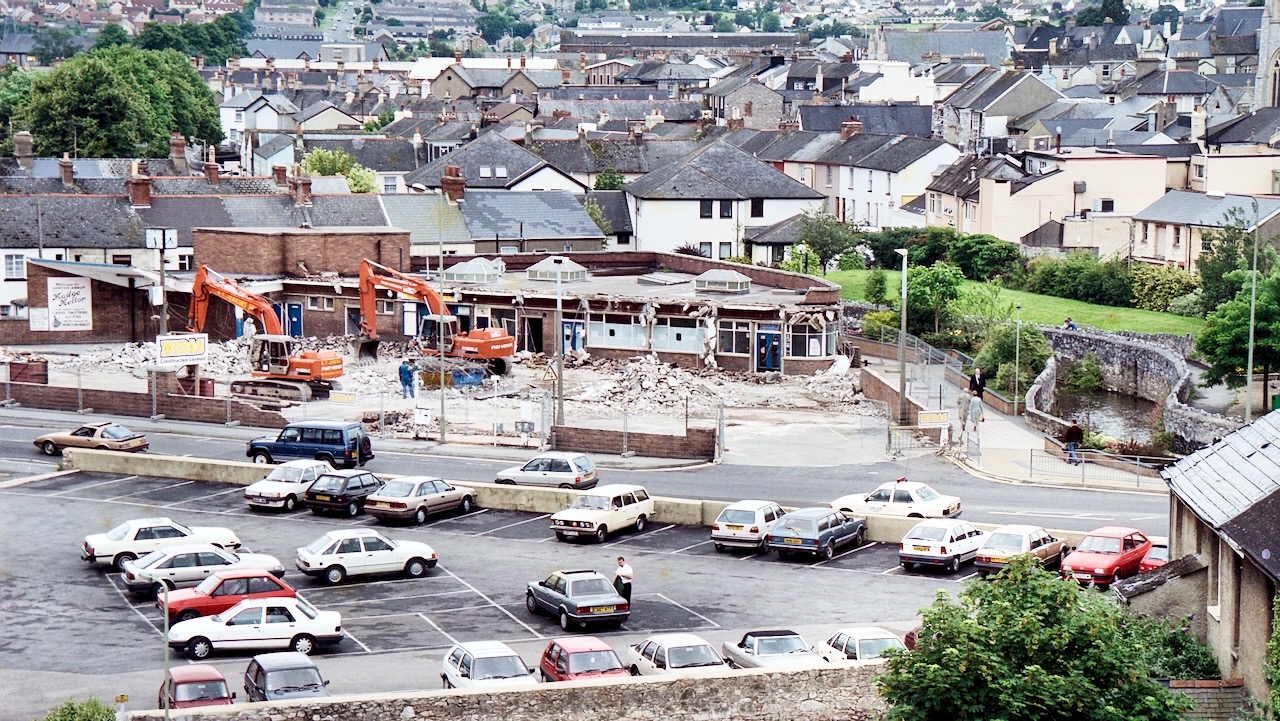
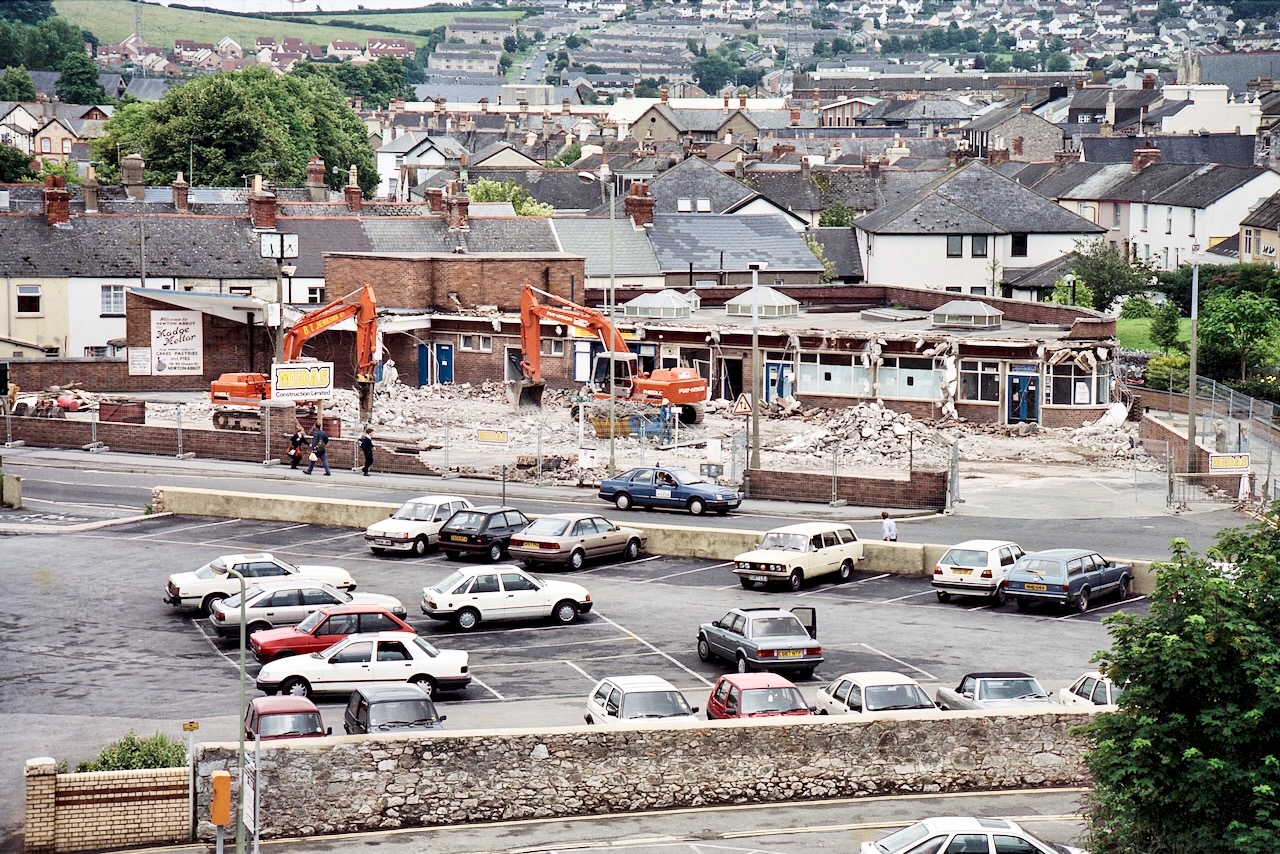
I can only assume that those who thought the demolition of such a valuable amenity would be a good idea also thought that people would simply stop using buses. Or perhaps it was more of a hope than an idea. In any event, no attempt was made to come up with alternative arrangements, other than the Shambles Canyon that we have today.
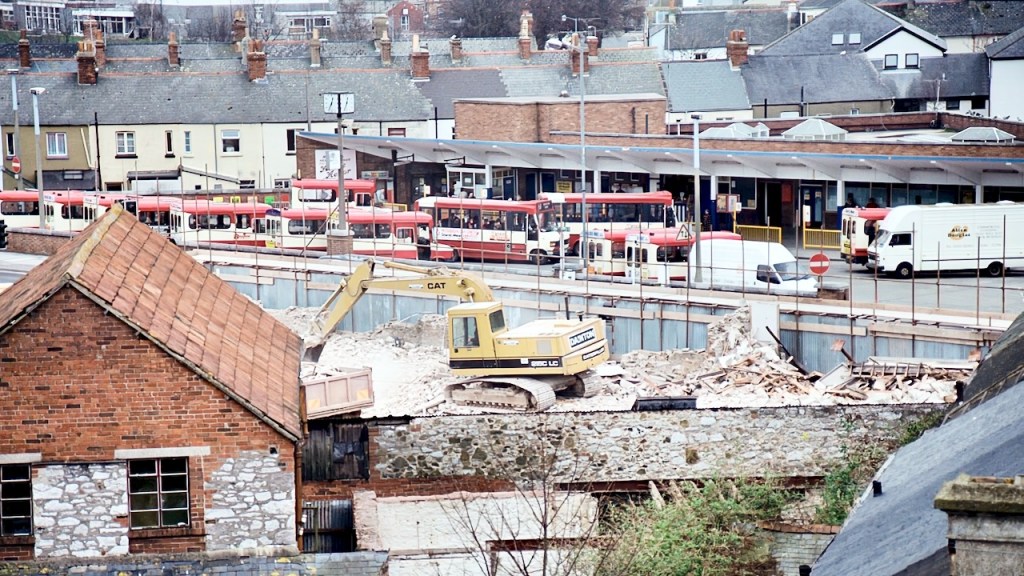
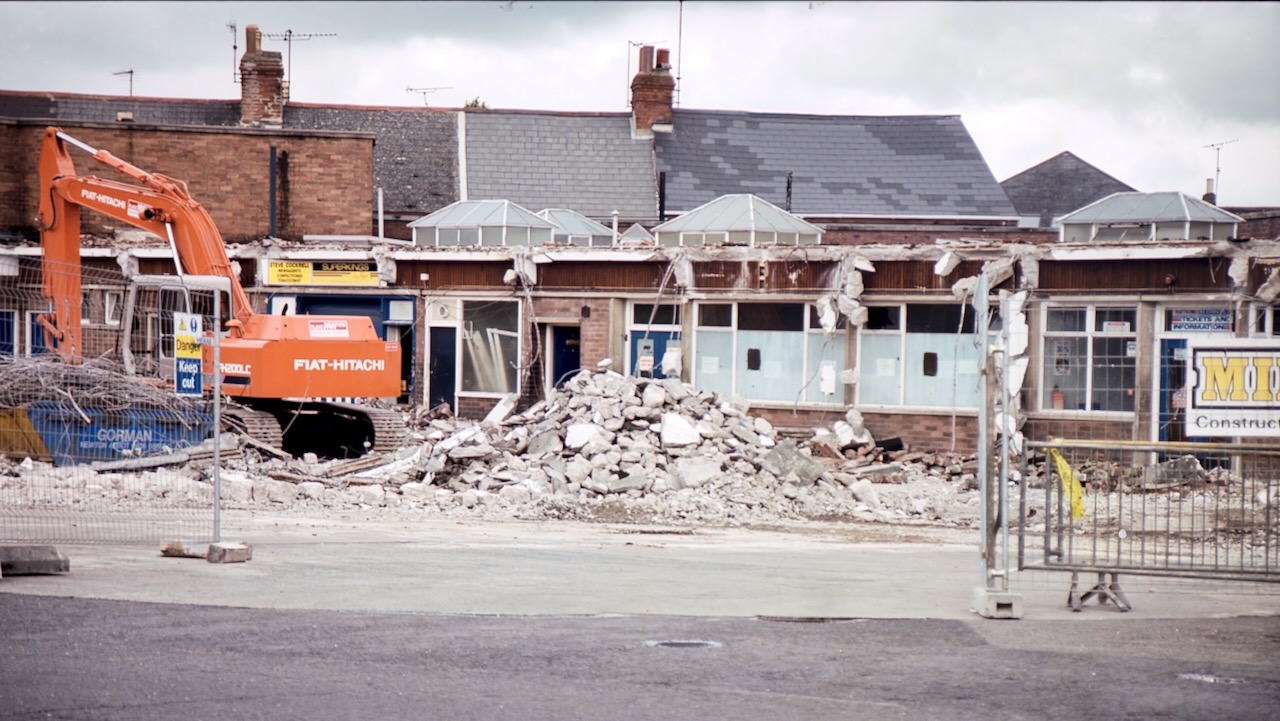
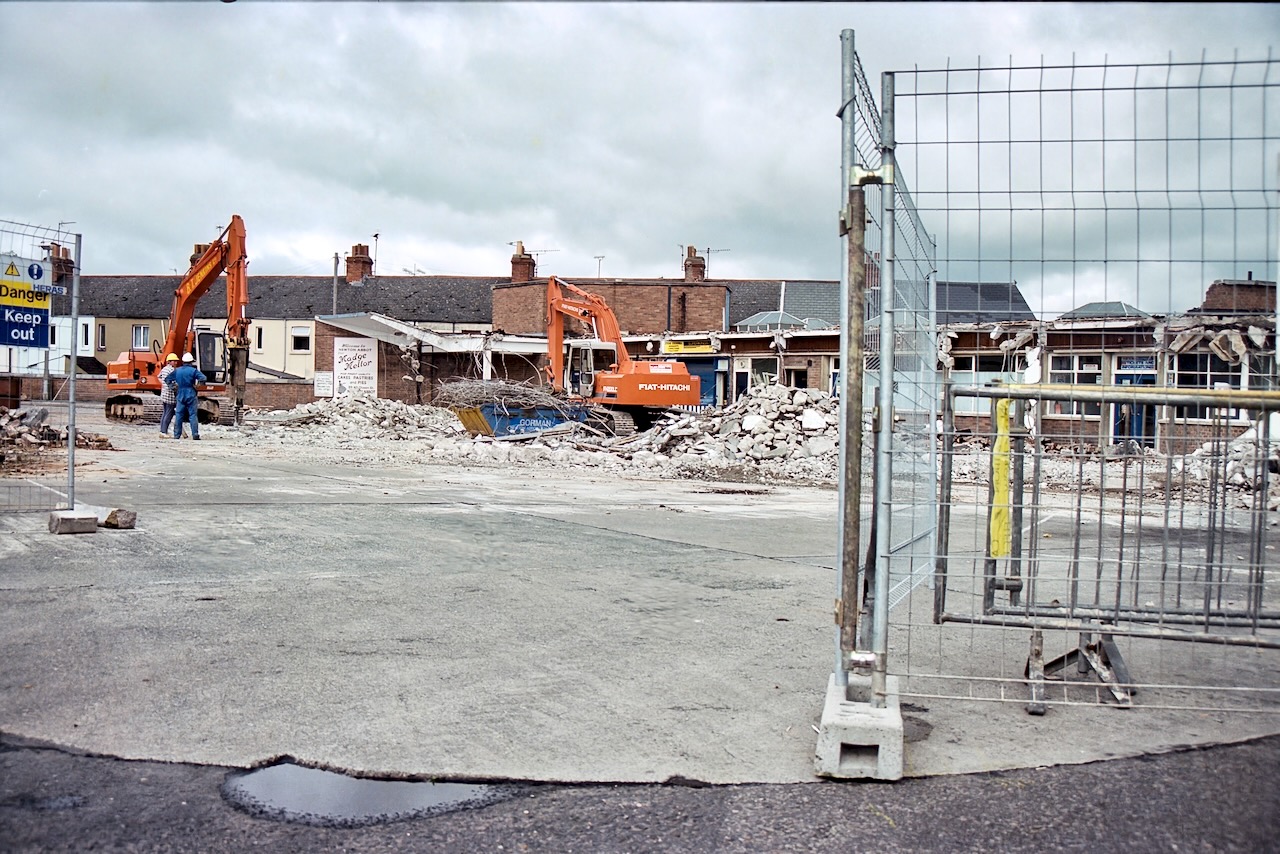
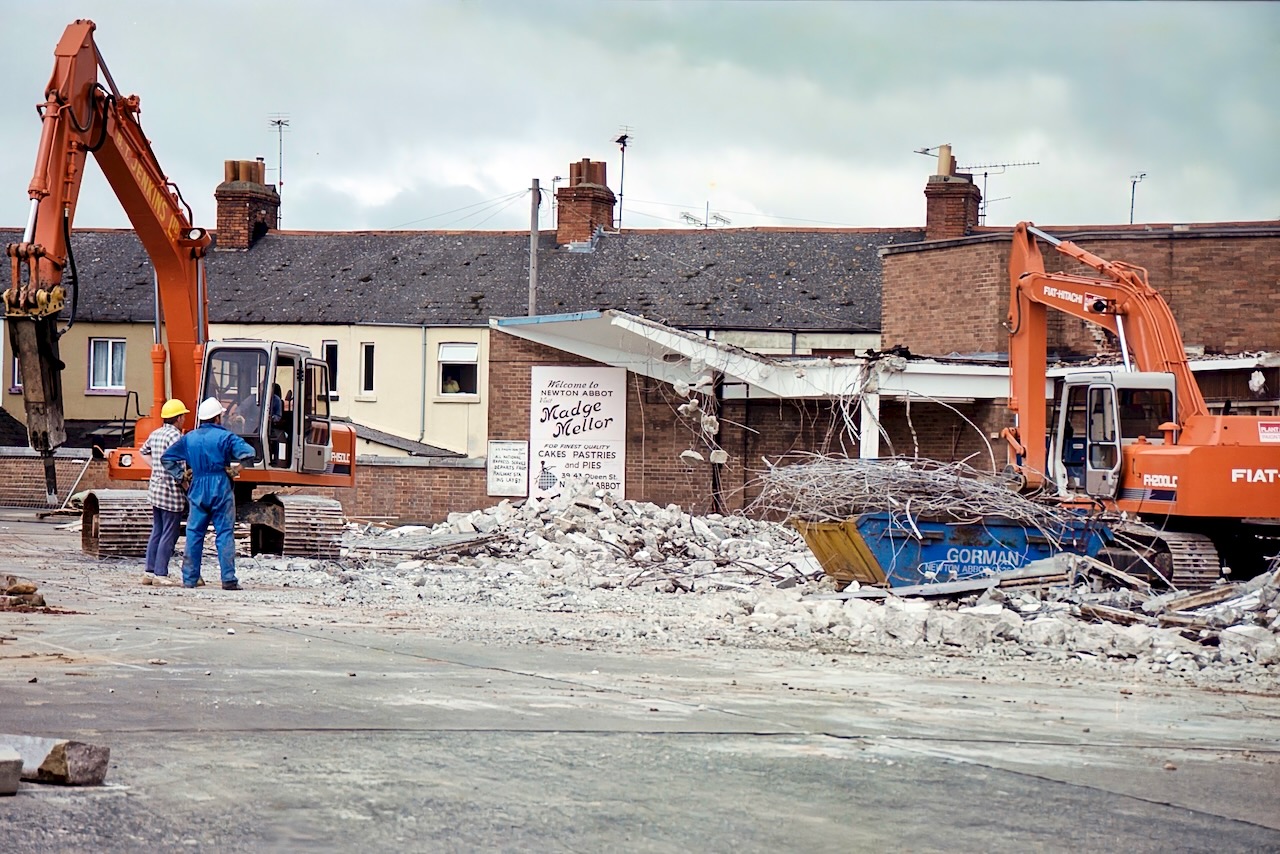
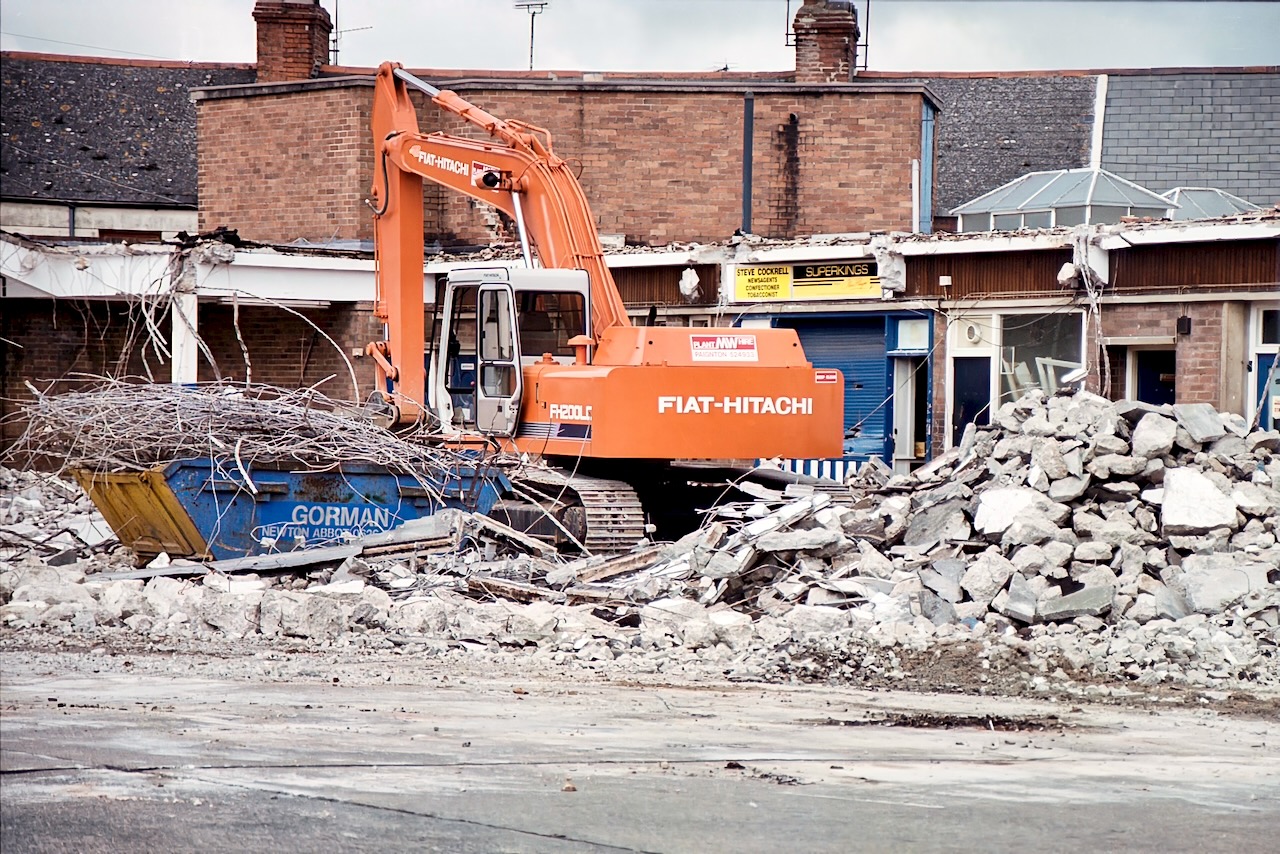
In 1990 – Just two years prior to taking the demolition photos – I was in town taking pictures of another demolition – of a parade of shops opposite the bus station, which became the car park that still exists today.
At the time someone who clearly knew nothing about public transport and the needs of ordinary people thought it would be a good idea to replace real buses with mini and micro-buses. The picture above shows these abominations in the station. Thankfully they did not last long and ended up at Thamesmead – the brutalist Clockwork Orange estate in south London.
And what became of the bus station site? The irony is that a phenomenally ugly four-storey office block was built for Government offices, which lasted for around 25 years. The Government, mainly Inland Revenue, moved out leaving it largely empty and left to rot. It is still standing in 2026 and, due to lack of maintenance, looks even uglier now than when it was first built.
Let’s swap a valued local amenity for a tax office. Whose bright idea was that?
And it wasn’t just the bus station. On a plot of land next door, which has been a small car park for many years, stood the Devon General Depot, where mechanics and engineers fixed buses and where there was a bus wash – like a car wash but much bigger and for double deckers! During May and June 2026 that site has been bulldozed and an enormous amount of concrete and stone dug up and taken away. I await to see what will be built there with a mixture of anticipation and dread; will the planners of today prove to be as hopeless as those of the 90’s?
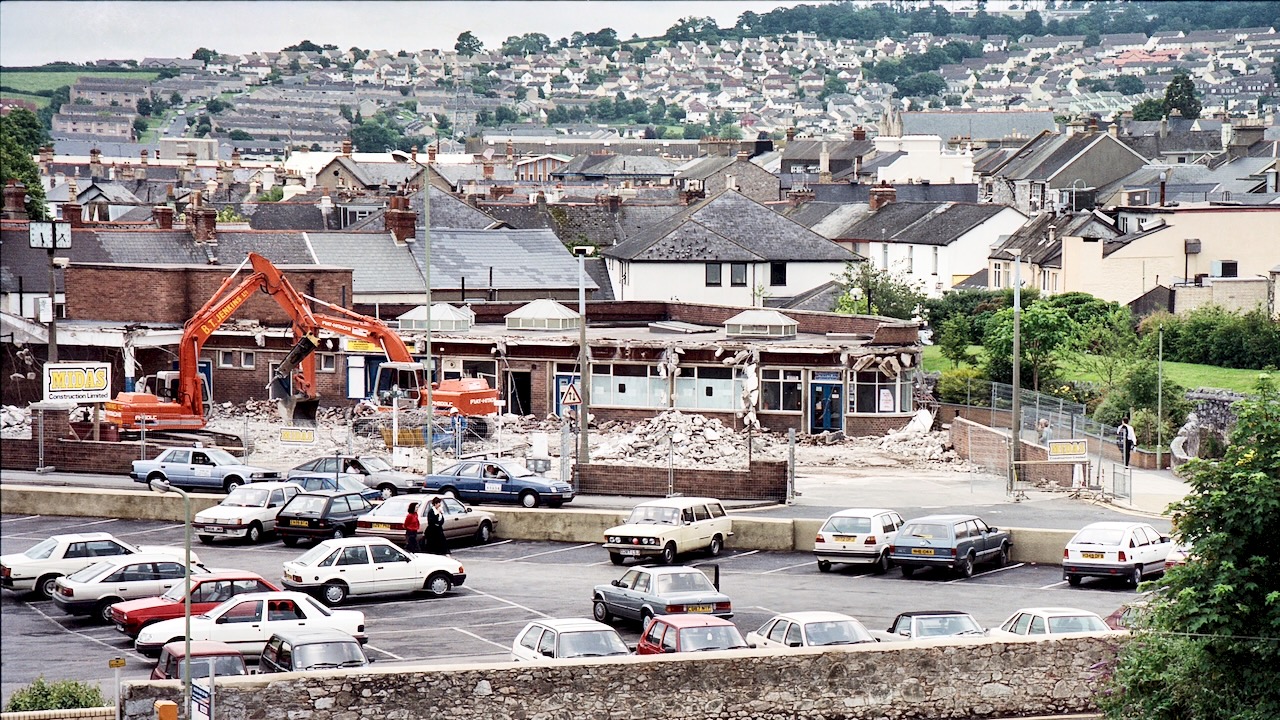
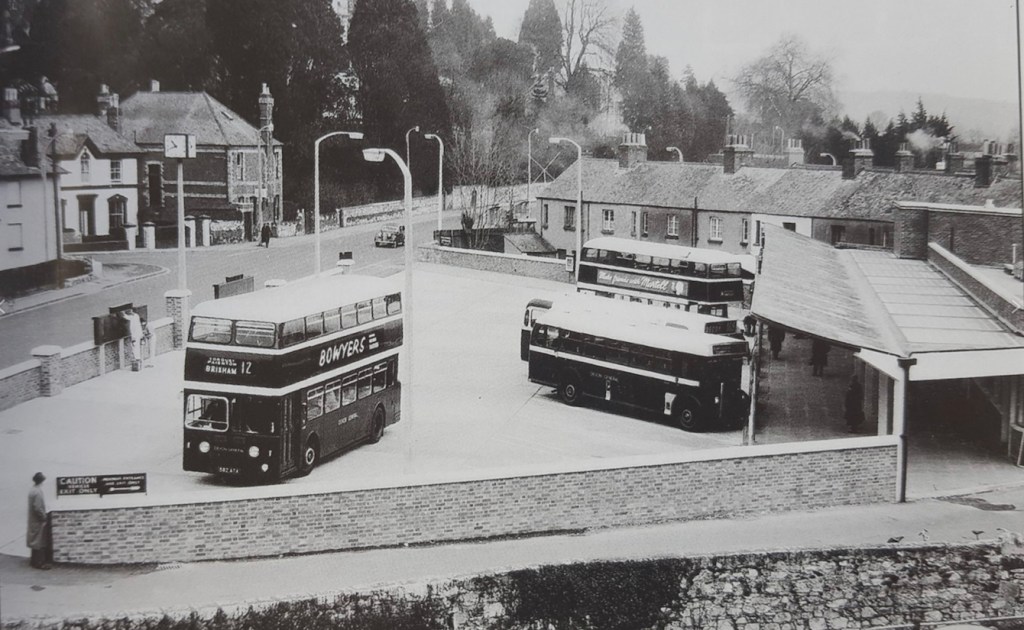
This was not taken by me! I found it on a Devon General heritage site and shows the original bus station when it was brand spanking new. If only we had this now… The buses look dark but Devon General red was darker than most people seem to remember – more of a maroon colour. And very nice it was too.
This is a substantially revised post with new photographs that was first published in 2020.


Any thoughts? Leave a comment!