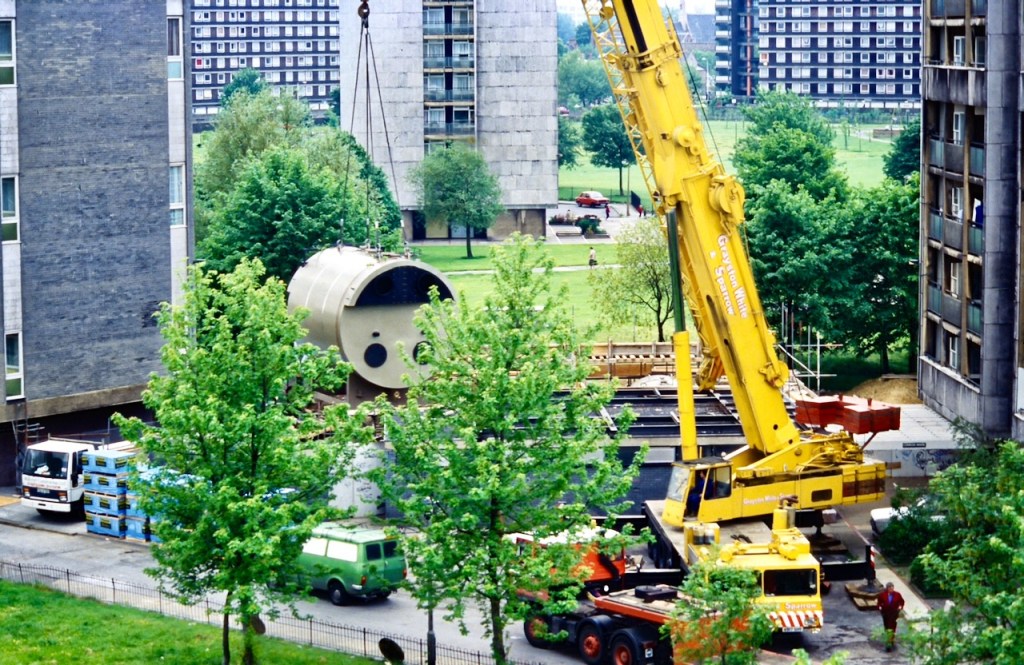
Providing a wet central heating system to six 18-storey tower blocks and four 6-10 storey blocks requires a great deal of planning. It would be all too easy for something to go wrong.
Brandon Estate, London Borough of Southwark
The first tower blocks built in London were provided with a warm-air heating system and, some 30 years later, it was decided to replace this with a modern wet central heating system. This meant fitting radiators in every room and copper piping to connect them all up. But how were you going to get the hot water from the Energy Centre on the estate to each flat?
The estate has district heating, which for many years was renamed ‘community heating’. Both terms are fine but we will stick with district heating for the purposes of this article. Essentially heat is generated in an Energy Centre on the estate and piped to every home. There is no need to provide a boiler in every home, which would be expensive to run both in terms of energy use and maintenance and replacement costs. It remains to this day a very energy-efficient means of providing low-cost heating in medium to high density urban areas, and is regrettably far more common elsewhere in northern Europe than in the UK.
There is no doubt about it: this would be a mammoth engineering task that required not only a great deal of inventive thinking but also meticulous project planning to ensure that everything was in place at the right time before the next stage would commence. This particular project on Brandon Estate in south London was undertaken during spring and summer 1987 in order to be ready for the heating season.
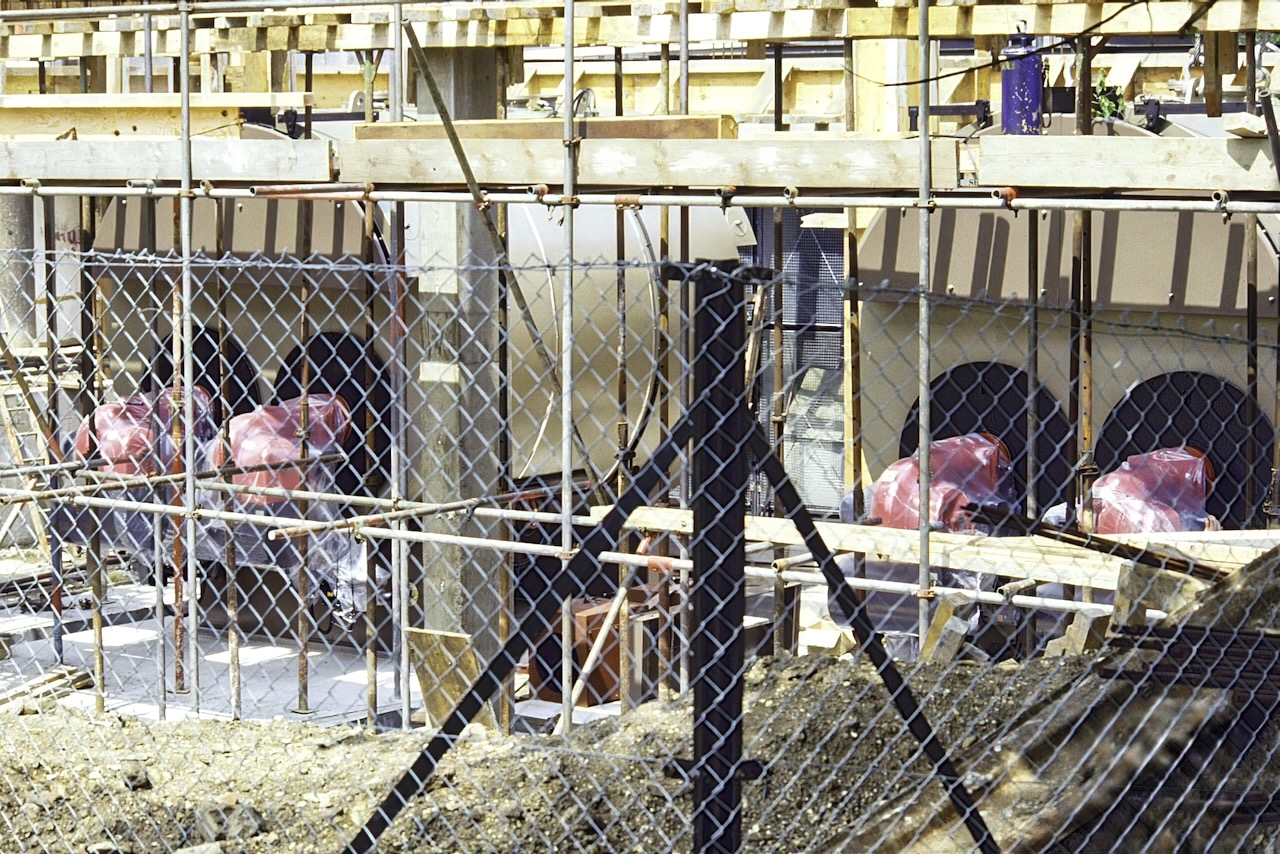
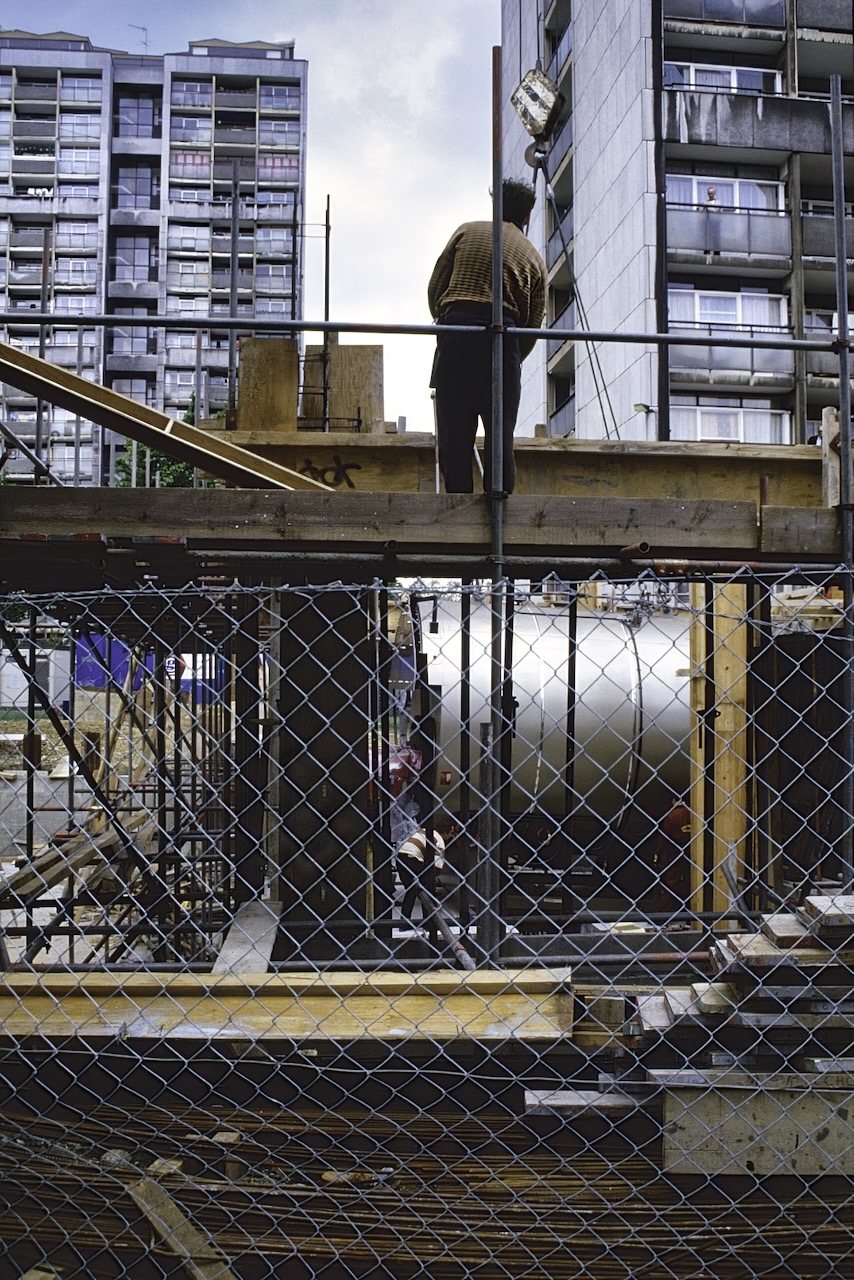
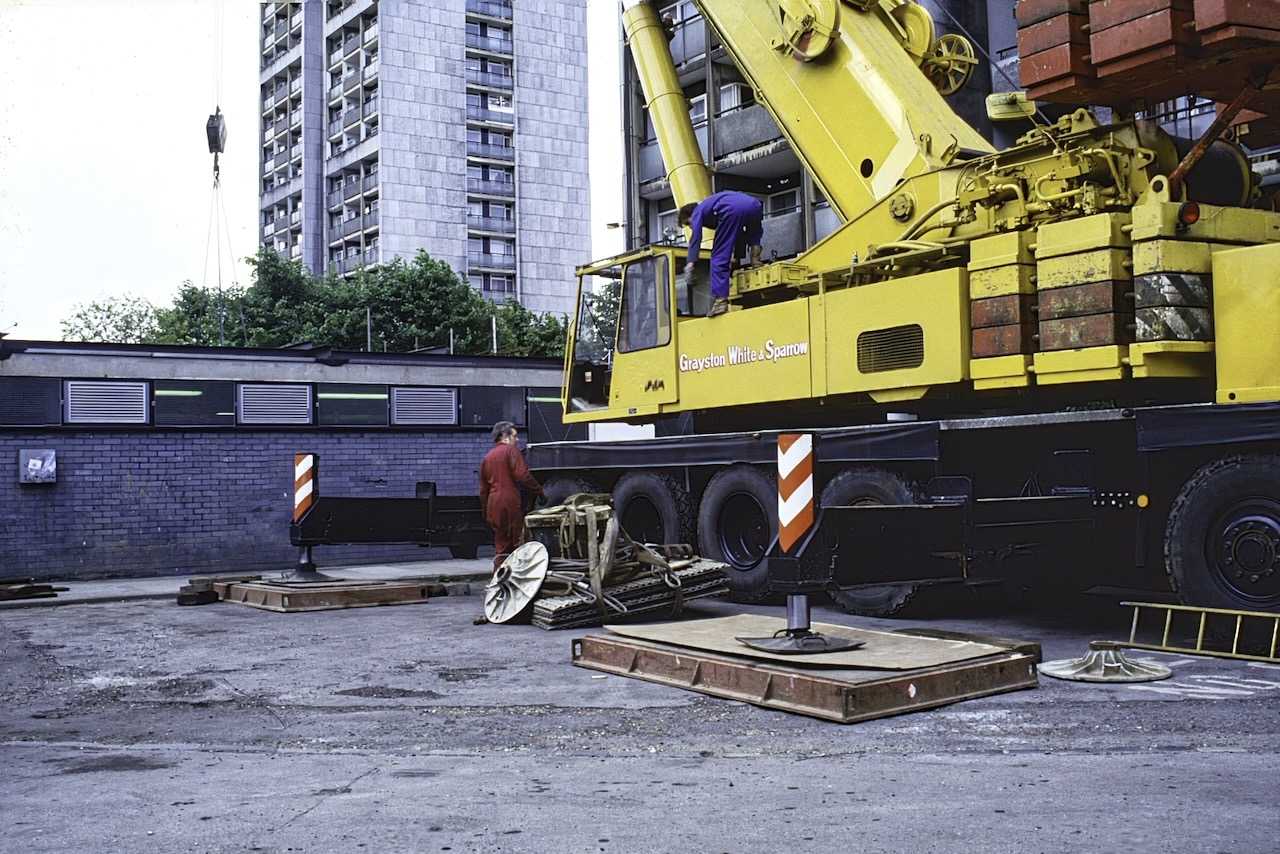
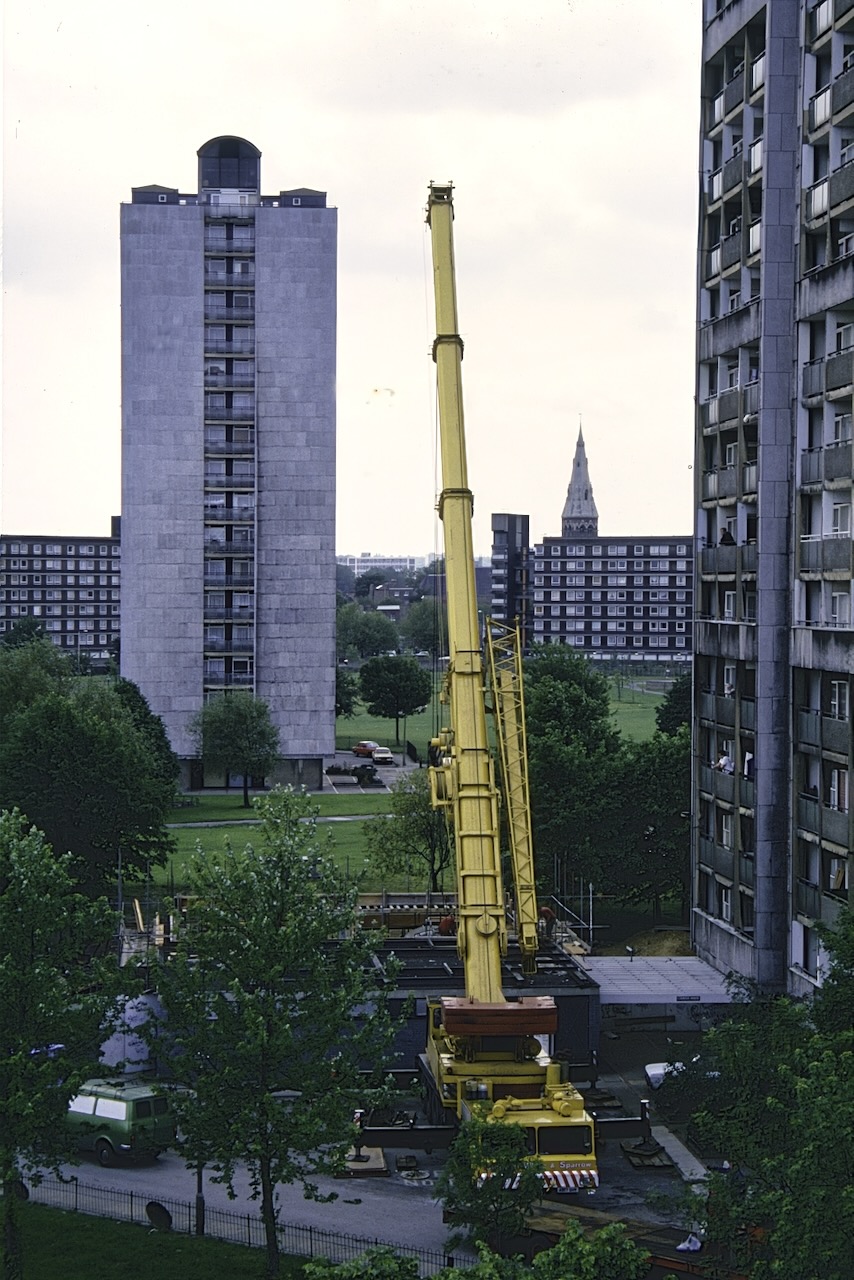
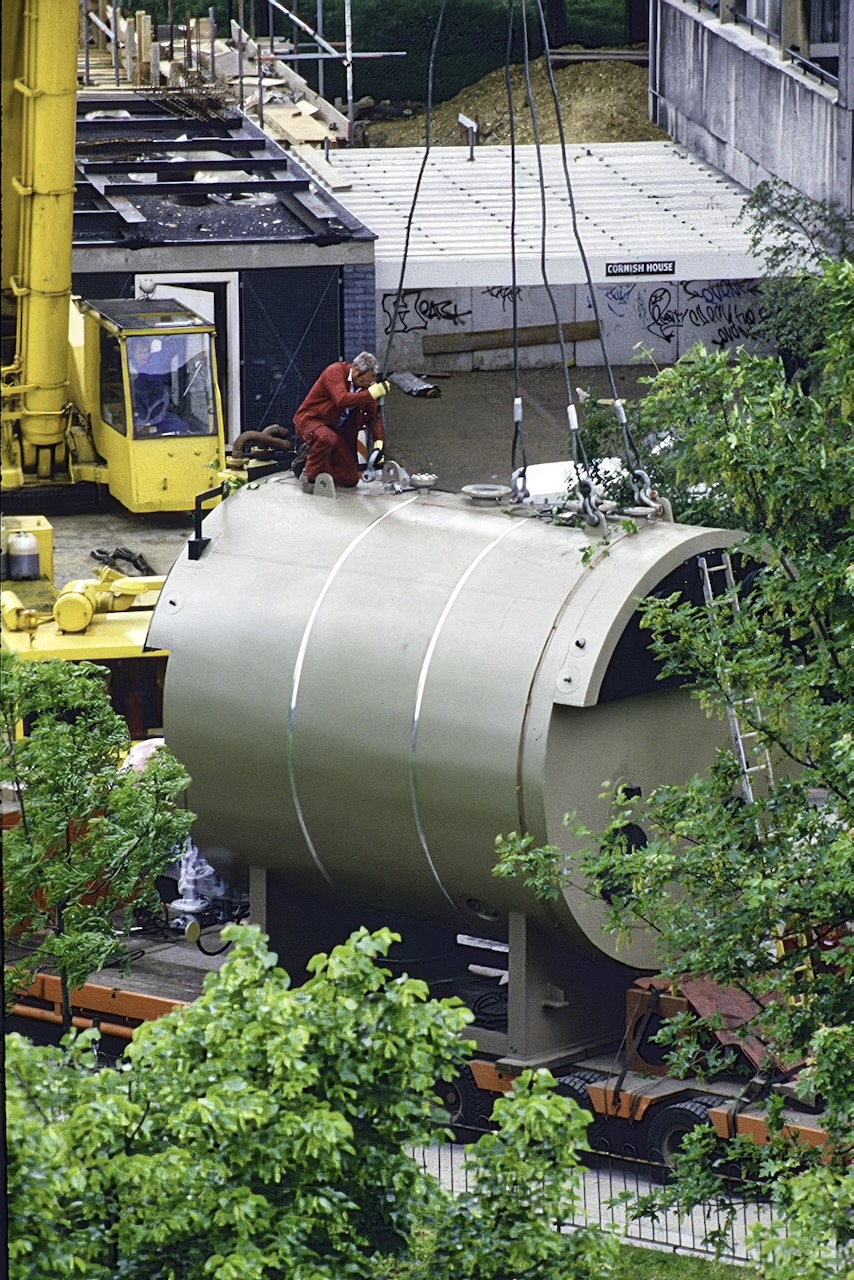
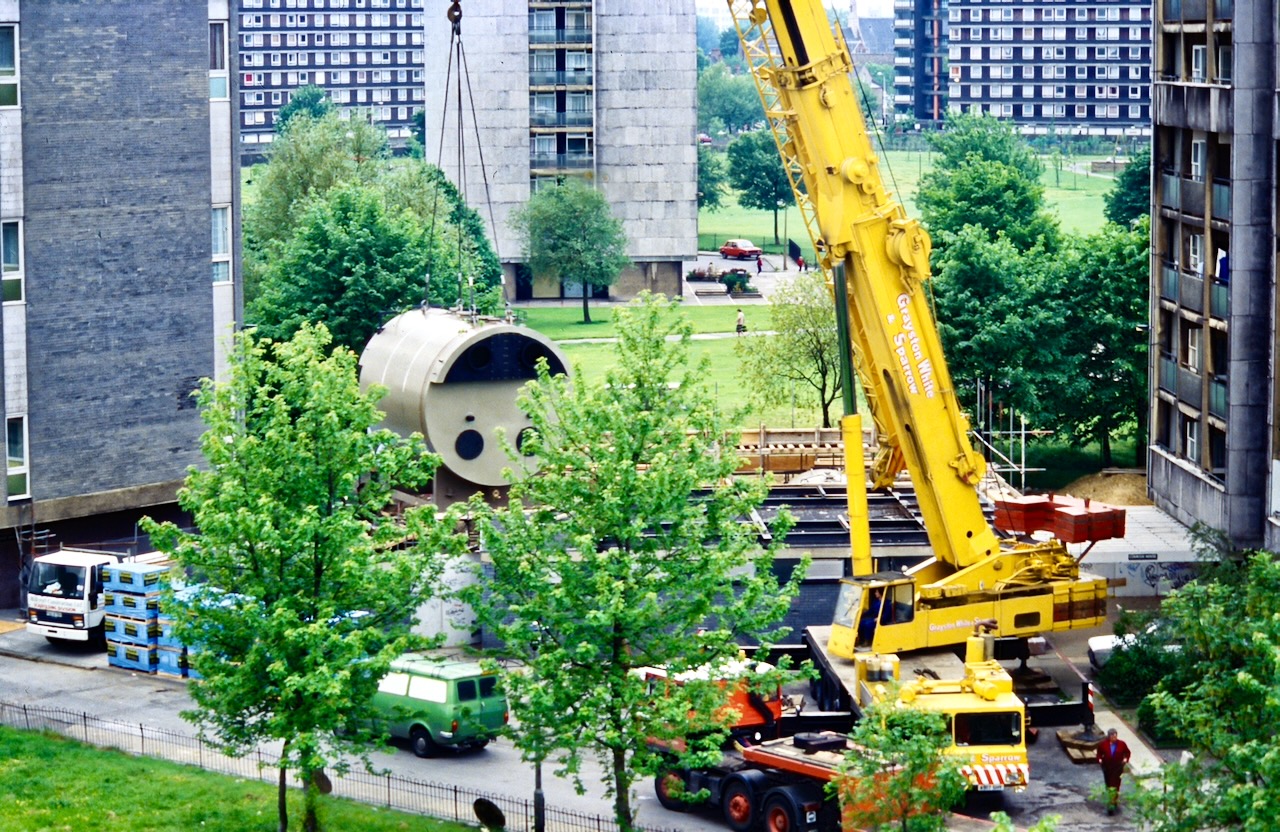
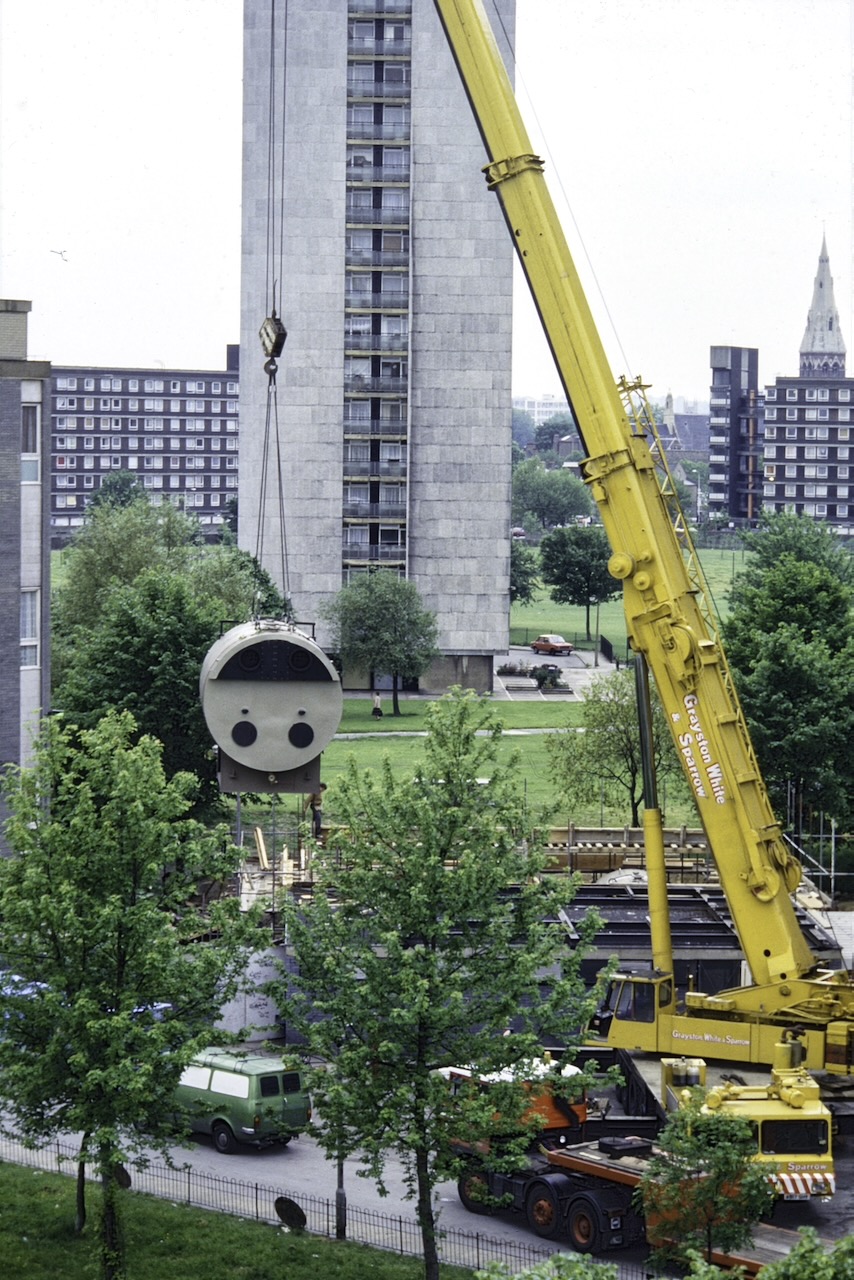
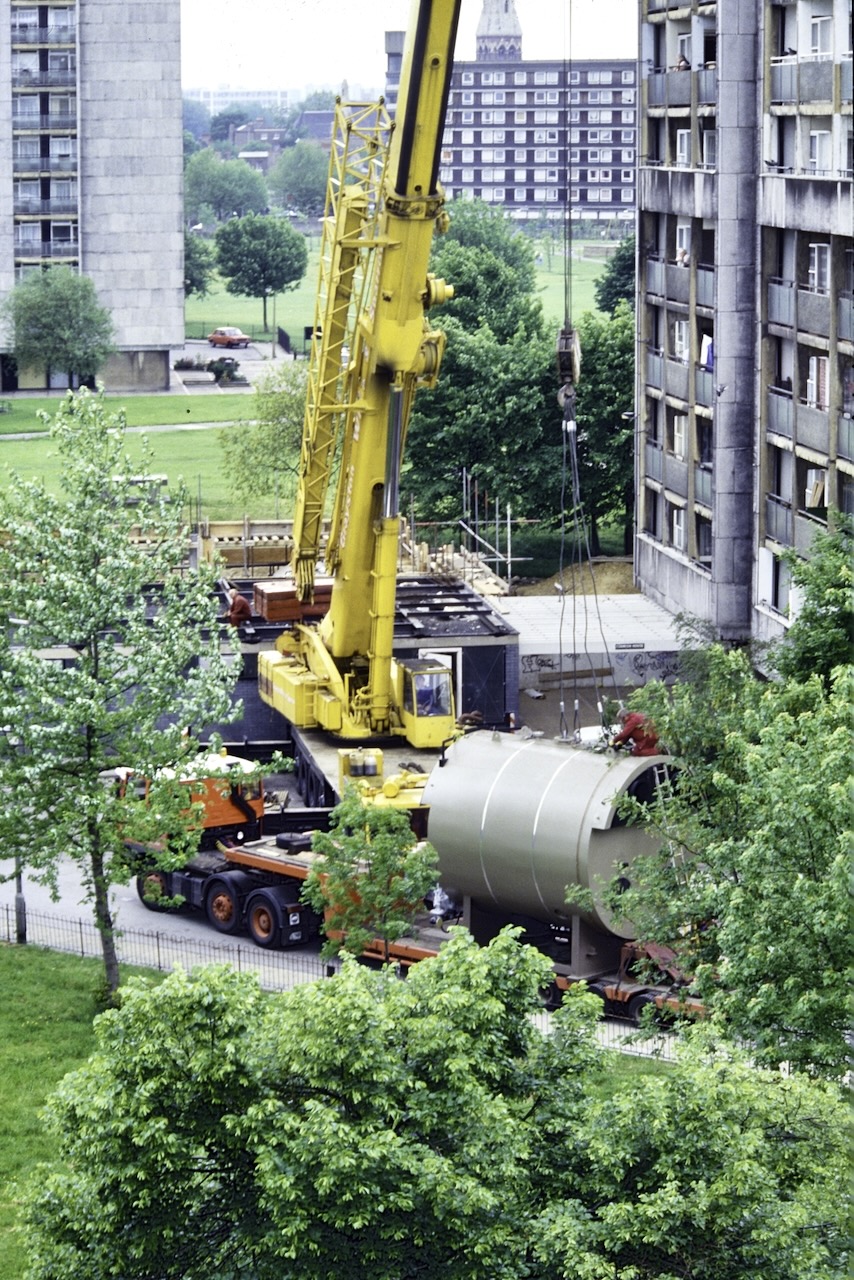
First of all, the existing energy centre would need to be tripled in size, with a new 2-storey extension of the same footprint as the existing building added on. The extension would house giant new boilers which would have to be delivered to site on special vehicles and craned into place with very large lifting gear. Programming was important: the walls of the extension could be built up only so far, and the boilers and other engineering equipment lowered into place before the building work could continue.
The Energy Centre extension enabled greater resilience and efficiency to be built into the system. More boilers of different sizes meant different systems for winter and summer loads, with boilers available to provide a backup should one fail. Even if there was a substantial failure during the heating season there was sufficient power in reserve to provide at worst minimal background heating. As tenants we knew this to be hugely advantageous over individual boilers in each flat failing and resulting in days – or even weeks – without any heating at all before repairs or replacement could be completed.
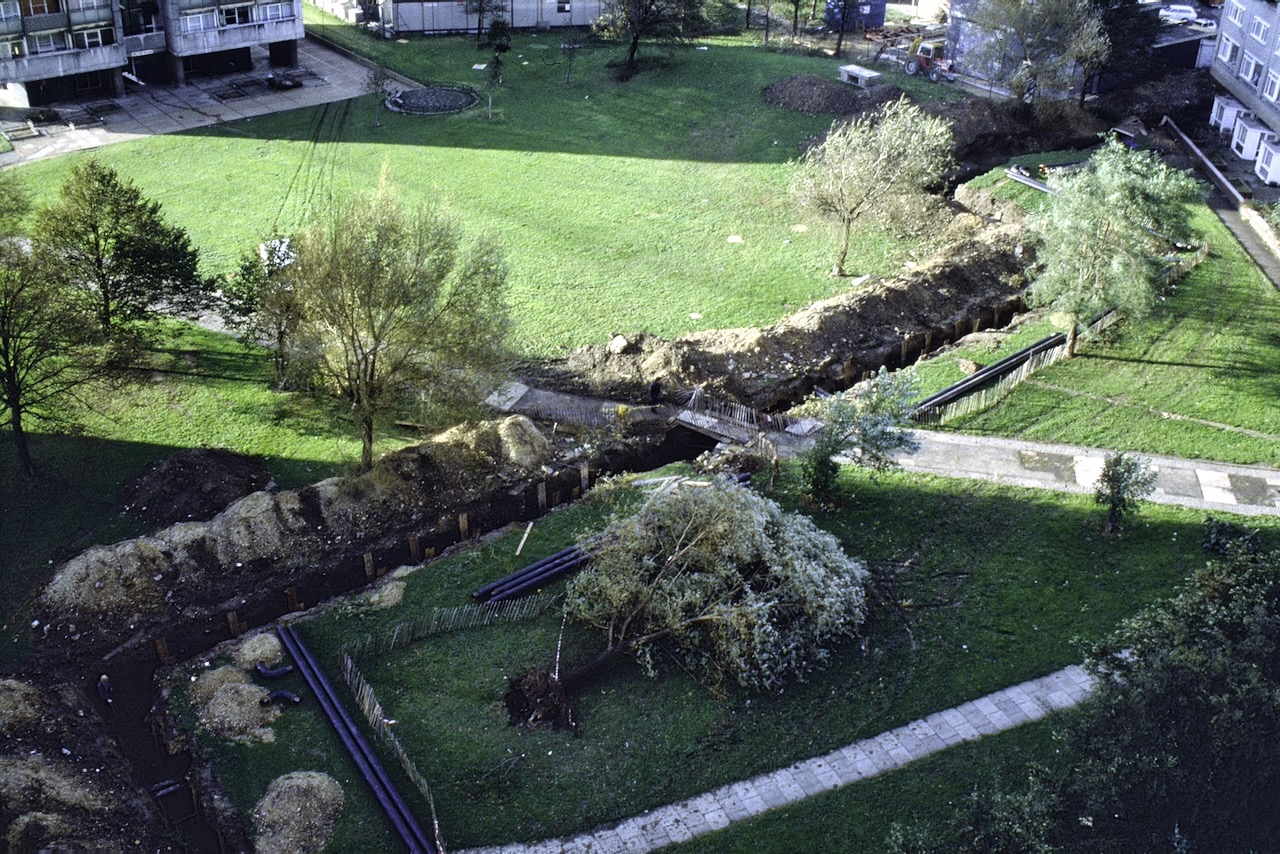
Whilst the new Energy Centre was being fitted-out trenches were dug across the estate in order to lay a new underground heat main of pre-insulated pipe. This would carry hot water to each block for distribution around the block and into each flat.
But how do you get the flow and return pipes up each block of flats? Because of the structure of the tower blocks it would be necessary to attach them to the exterior of the block against the stairwell, as can be seen in the photograph below.

In the photograph you will see that each floor is served by pipes taken off the main upright, all boxed-in with metal sheeting by the time this photo was taken. This changed the external appearance of each block but not in a negative way according to most of the tenants I spoke to during the course of the works.
There are four flats on each floor of the tower block, all identical apart from the four ‘penthouse’ flats on the 18th floor. This simplified the design requirements up to a point since, apart from anything else, the heat load of each flat would be similar and the means of getting flow and return pipes into and around each dwelling was the same.

In answer to the question – did something go wrong – the answer was surprisingly little. The whole project was well planned and executed and, so far as I recall, completed by the start of the heating system.
The role of Brandon Estate Tenants Association (BETA)
Southwark Council developed a good track record of consulting with tenant’s associations over a period of years, and this project was no exception. I had been elected as Chair of BETA at the time and formed a sub-committee to meet regularly with council officers and contractors. There were a wide range of issues to work through, everything from giving up a car park for the site portacabins and welfare facilities to be located through to the location of radiators and pipework within each dwelling.
From time to time we would organise special ‘heating’ meetings on the estate open to all tenants, attended on one occasion by our MP Harriet Harman. In general, the introduction of a new wet central heating system was welcomed, although a minority had doubts about having hot water circulating in tower blocks and radiators taking up space in rooms. The fact that the existing warm-air heating was so ineffective, uncontrollable and unhealthy helped.

The heating and hot water charge became an issue, but not for long. Most tenants knew someone who lived in a home with a gas boiler and the cost of heating and maintenance. On Brandon the heating charge was the same for every flat, and the majority of tenants saw the sense of this.
Water metering – or heat metering to be precise – was becoming an issue at the time, but we agreed that the cost of installing meters in every home and of billing each household separately was, not to put too fine a point on it, daft. Tenants on the whole seemed happy that elderly people who spent much of their time at home would need more heating than others, and would not be afraid to put the heating on when they needed it. There were, inevitably, a small minority of tenants who had the heating on and the windows open, literally wasting heat, which became an issue a few years later with the enactment of the Home Energy Conservation Act 1995.
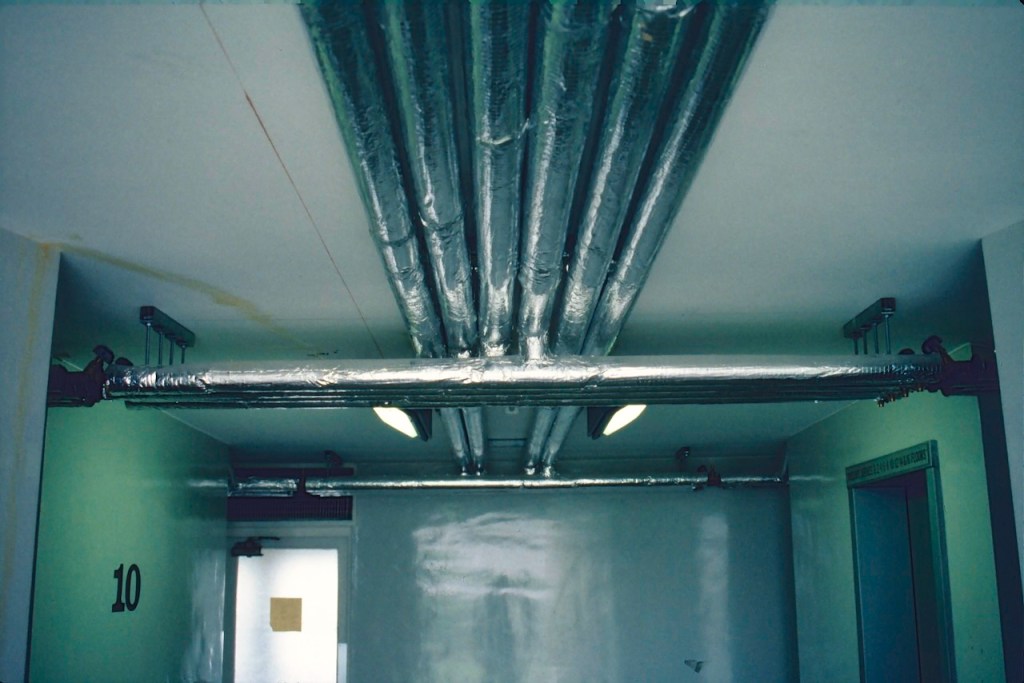
We did not always get our way. For example, a majority of tenants – but not all – wanted the internal pip-runs to be boxed-in. The Council worked out the price of doing this and ultimately we agreed to their proposed compromise to paint the pipes rather than boxing in. We were all the time acutely conscious that the cost of works was being met by tenants across the borough as a whole.
As BETA Chair I represented Brandon – the largest estate in a local authority with 58,000 council properties – at borough-wide meetings with the Council as well as the Southwark Group of Tenants Organisations. There was, shall we say, a certain amount of competition between estates as to who should benefit first from the capital programme! But in general debates were very good natured and everyone knew that they were more-or-less in the same boat. Put it this way, we all met up in the pub afterwards – where the real business of meetings sometimes (often?) takes place!
More information on District Heating
UK Government:
Opportunity areas for district heating networks in the UK
Photo album: retrofitting wet central heating to tower blocks
As ever, click on an image to enlarge to correct aspect ratio.







 Colin Anderson
Any thoughts? Leave a comment!