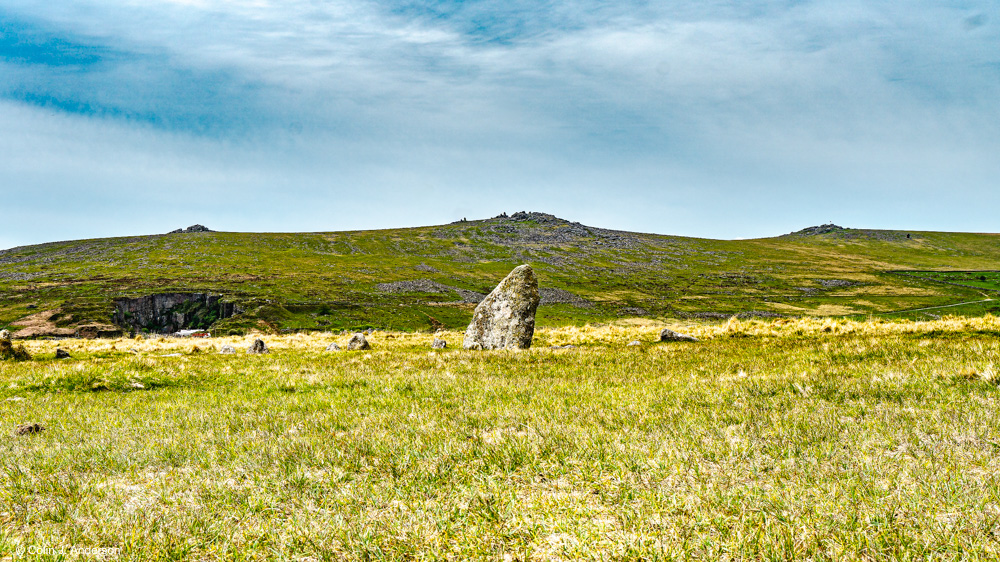
I have been fascinated by this site since a schoolboy and visit from time to time, although not having a car these days can be limiting – you certainly ca’t get here by bus! On the occasion of these photographs I took advantage of a lift from friends who were staying with me – all the way from Minnesota.
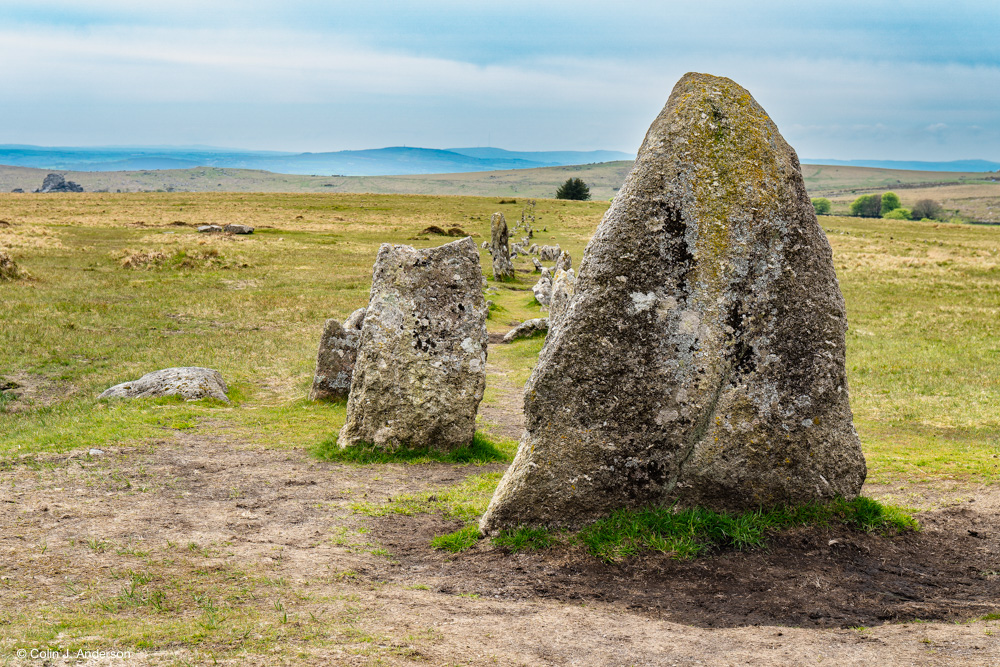
We will never know what made our ancestors build such dramatic stone rows and standing stones some 5,000 years ago, but it certainly fires the imagination!
This is a great site to visit as it is so easy to get to by car, just a short walk from the B3357 west of Dartmoor Prison.
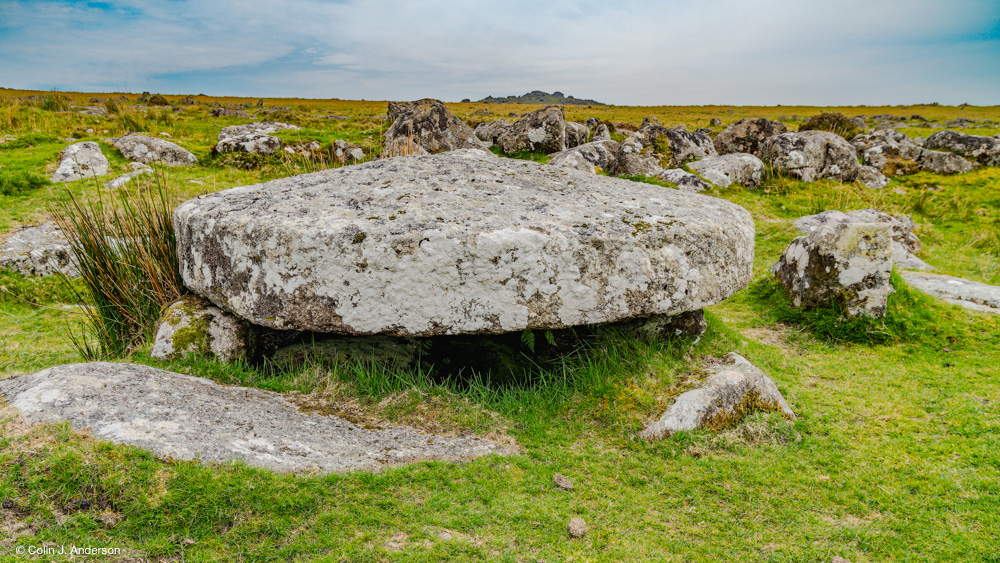
There are a number of striking Neolithic artefacts here dating from about 3,000 to 2,300 BCE with stone rows, cairns and menhirs. There is also a group of around 50 Bronze Age roundhouses dating from about 2,300-800 BCE.
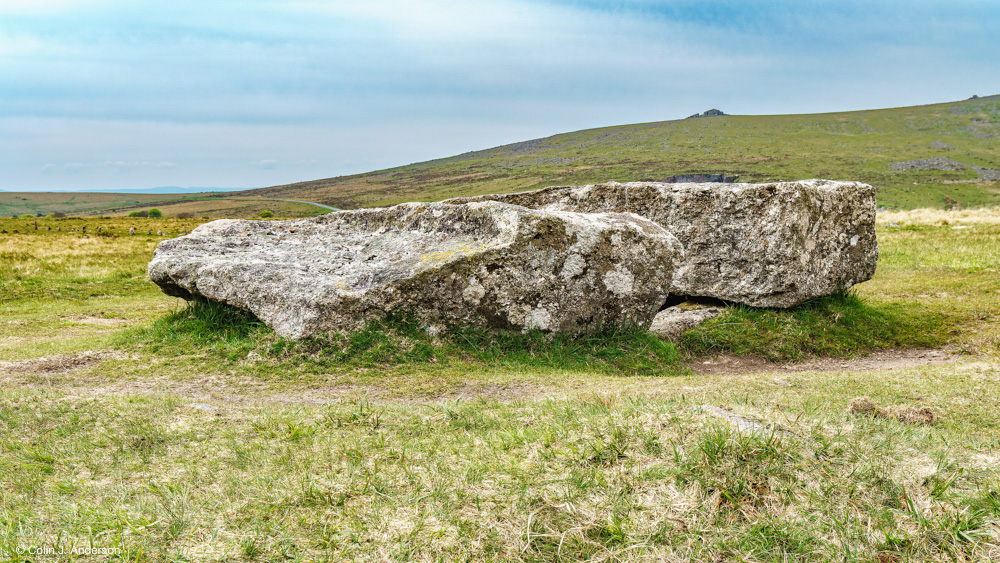
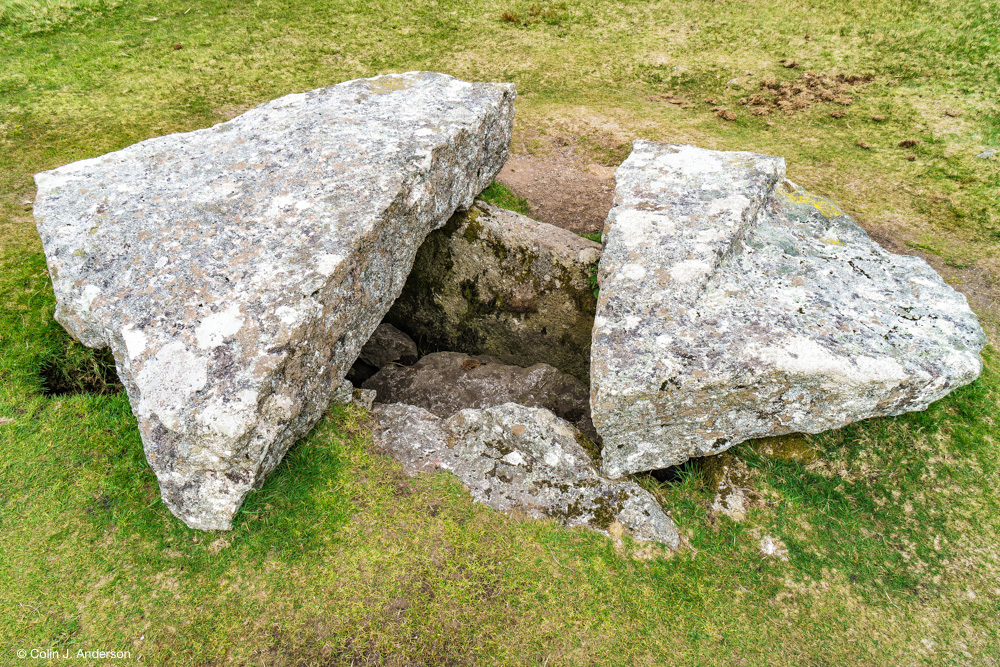
One of the photographs shows a stone-lined burial chamber known as a cist, with an unusually substantial capstone that is split in two. How or when it came to be split is unknown (so far as I know).
Fieldwork was carried out at the site in 1827/8 but a more intensive – and perhaps more scientific – exploration was made under the aegis of the Devonshire Association 1893-1906. But even this was haphazard by modern standards.
Excavations have been carried out at similar sites around Britain and in France but, interestingly, those on Dartmoor have striking similarities to those in Caithness and Sutherland.
My early memories of Merrivale – and menhirs
My earliest memories of visiting the site are from a school trip in 1970, when an entire class of 40 boys lived on the moor for a week. It was an unforgettable experience and, at that time, the granite quarry was still working and producing fine highly polished marble for significant buildings around the world.
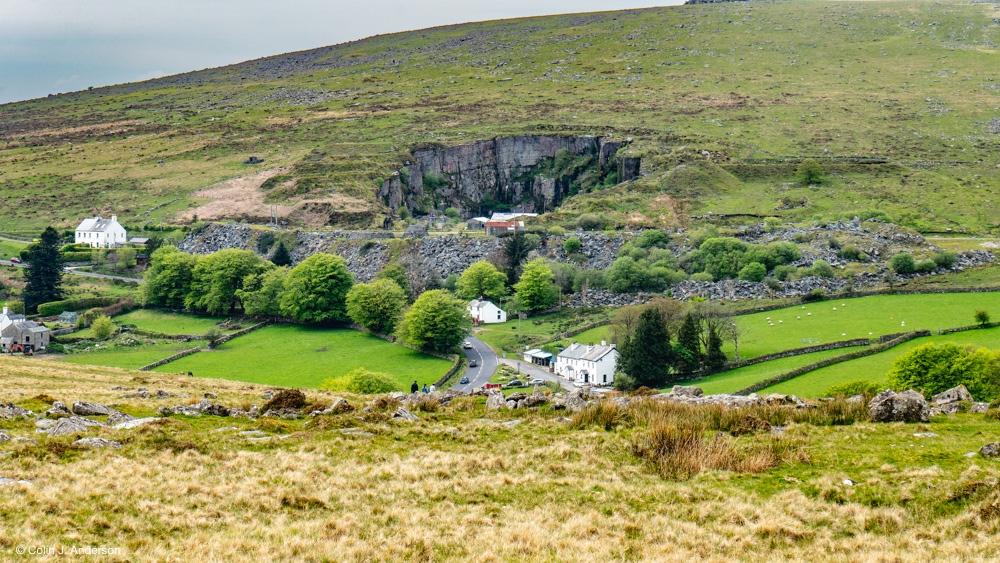
The quarry was a latecomer by local standards, being opened in 1876. The New Scotland Yard building of the 1950’s is built with granite from here. The old London Bridge stone was cleaned and repaired here before 200 tons were shipped to Arizona for reconstruction. Granite clitter and spoil from the quarry – and all the prestige structures built using it – are piled in an enormous heap in front of the quarry, quite a sight in itself.
At the time I had a particular fascination for menhirs – standing stones – as these may have been the inspiration for the monoliths in Arthur C. Clarke’s 2001 A Space Odyssey (my favourite film); he was of course from Somerset. The menhir at Merrivale is nearly three metres high so quite imposing and, for me, inspirational.
There is a great deal to say and learn here but I have kept this short. The English Heritage website has more information. I have a dozen or so books that are good sources, including the Dartmoor Atlas of Antiquities by Jeremy Butler (vol.2 of the 4 volumes); Dartmoor A New Study edited by Crispin Gill; The Dartmoor Reaves by Andrew Fleming; etc.
Photographs
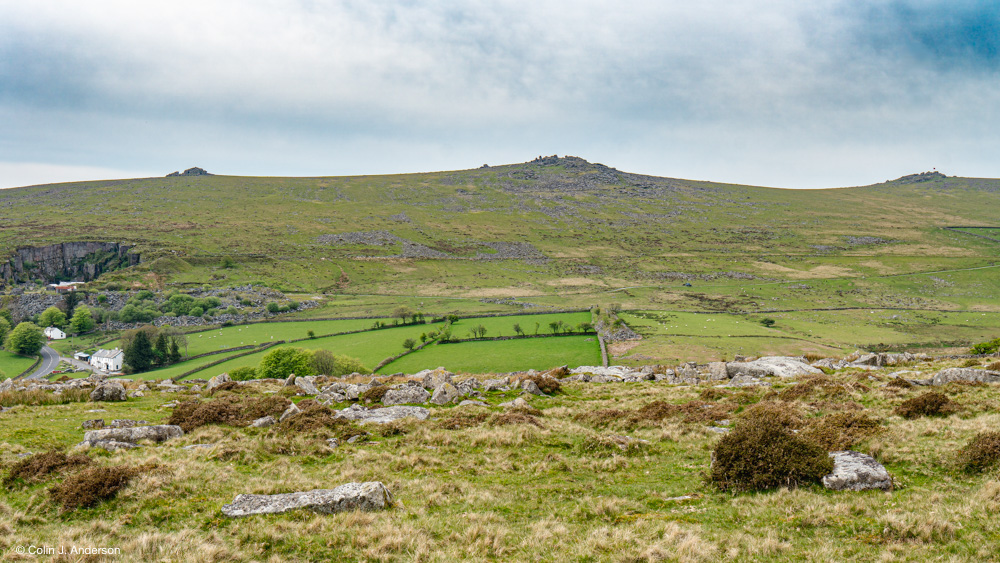
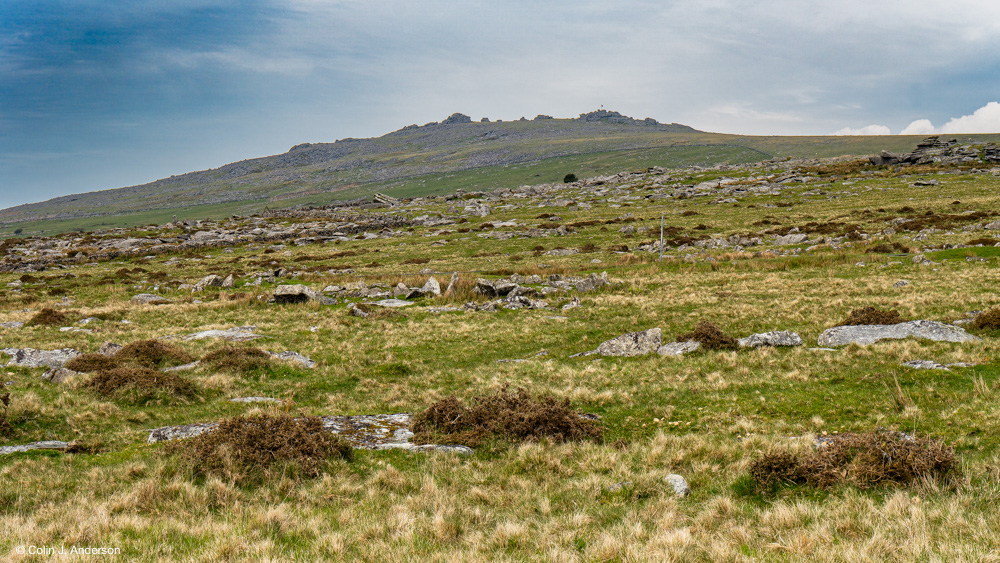
The images below are a selection of those taken on the day in May 2024. It was overcast with quickly-changing light conditions and a sky that varied from moody to serene – so common on Dartmoor. Pictures taken with my Sony A6 and shown here reduced to 1000 pixels (on the long side) and 90 per cent of original quality. I switched off HDR for the benefit of those without HDR screens. Please contact me if you would like full-size copies.


 Colin Anderson
Leave a reply to James Elkington Cancel reply